
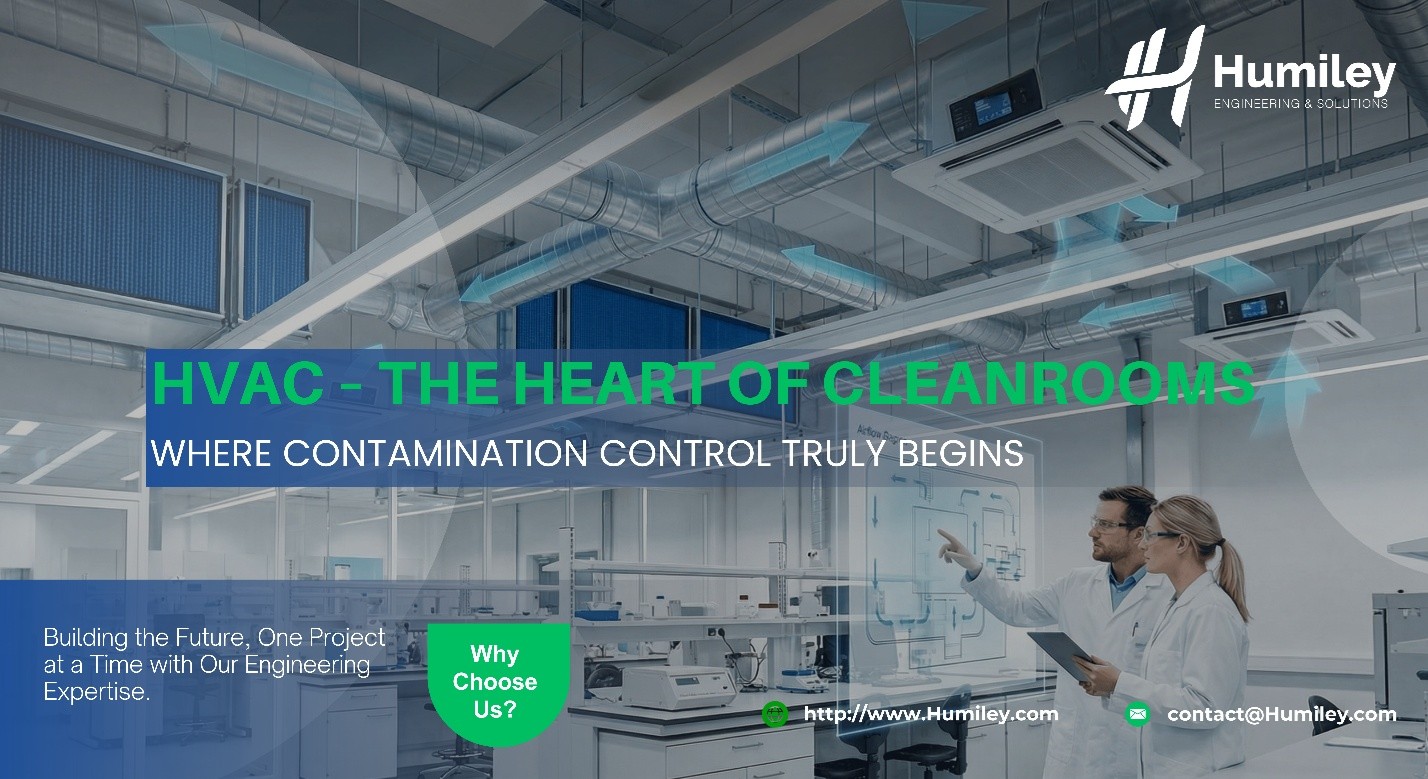
A cleanroom can meet its classification on paper, yet fail GMP expectations if HVAC performance is unstable or poorly aligned with operational reality.
Cleanroom Performance Is an HVAC Outcome
Cleanroom performance is often discussed in terms of ISO classes or GMP grades.
In practice, performance is driven by how effectively HVAC systems manage:
When HVAC design does not fully support these functions, contamination control becomes inconsistent — regardless of how well the space is classified.
Why HVAC Is the First System Auditors Question
During GMP inspections, HVAC systems are rarely assessed in isolation.
Auditors focus on how environmental control is maintained during real operations: personnel movement, material transfer, cleaning, maintenance, and upset conditions.
Common audit concerns include unstable pressure cascades, insufficient air recovery, poor zoning between clean and less-clean areas, and HVAC systems that are difficult to monitor or adjust without disrupting operations.
These issues are rarely caused by equipment selection alone.
They are the result of early design decisions that underestimated the role of HVAC in contamination control.
Designing HVAC for Control, Not Just Comfort
In pharmaceutical facilities, HVAC design must prioritize control over comfort.
This requires a clear understanding of cleanroom zoning, operational flows, and critical interfaces between rooms.
Key HVAC design considerations include:
Without this alignment, HVAC systems may technically comply with standards while still creating operational and compliance challenges.
HVAC and Long-Term GMP Reliability
HVAC systems operate continuously and influence nearly every aspect of cleanroom behavior.
Designs that are difficult to balance, monitor, or maintain increase the risk of deviations, repeated interventions, and audit findings over time.
A GMP-reliable HVAC system is one that:
These qualities are established during design — not corrected during validation.
At Humiley Group Inc., Our HVAC Design Philosophy
At Humiley Group Inc., we approach HVAC as the core system that defines cleanroom performance.
Our design process starts with contamination control objectives and operational behavior, then translates them into HVAC zoning, pressure strategies, and system architecture.
By designing HVAC systems around how cleanrooms actually operate, we help clients achieve stable environmental control, smoother validation, and long-term GMP confidence.
In pharmaceutical facilities, HVAC is not just the heart of the cleanroom — it is the system that keeps GMP control alive.