
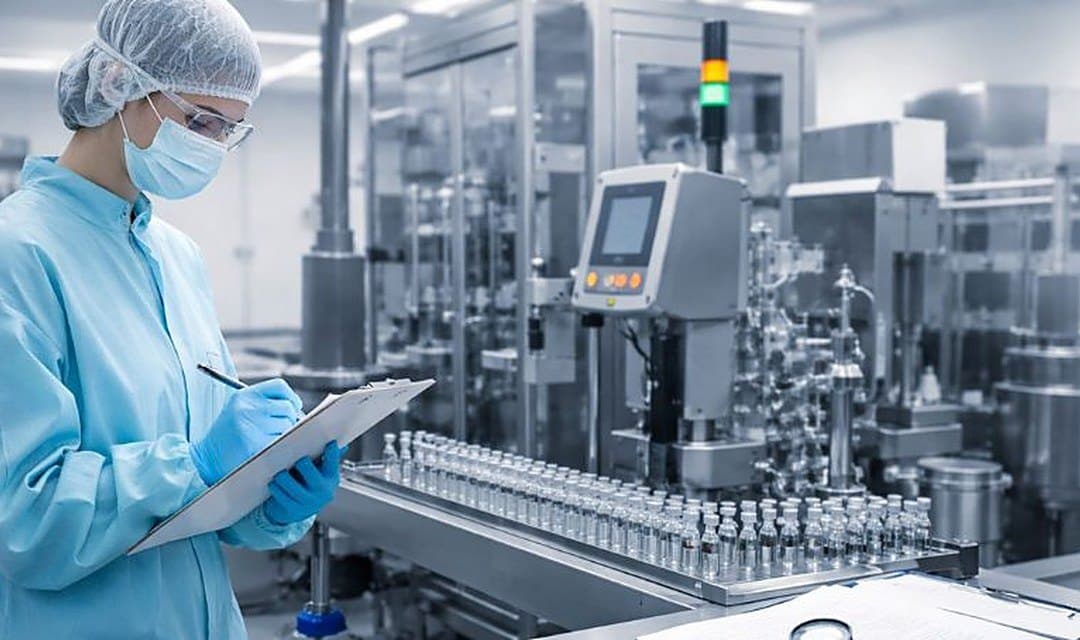
Turnkey EU-GMP / WHO-GMP facilities for pharmaceutical, biotech, medical device, and healthcare production — engineered for sterility assurance, data integrity (ALCOA+), and seamless regulatory compliance.
Learn more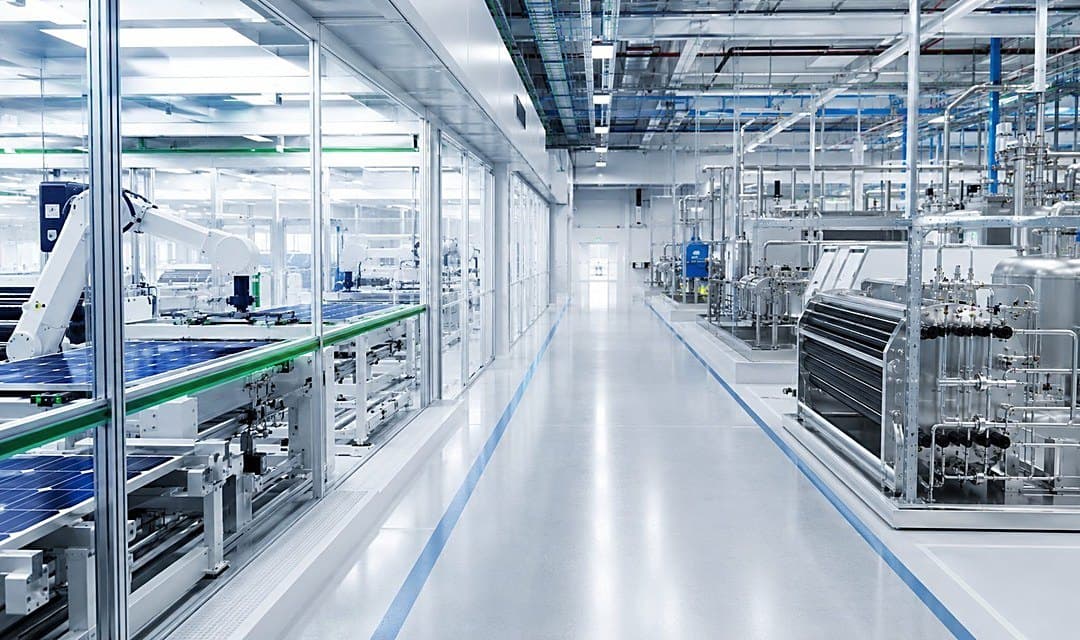
Where we work
Industries
The sector decides the engineering, and the destination market decides the evidence. Both are fixed in the design basis before a line is drawn.
Sector expertise
Critical environments cannot be commoditized
The sterility assurance required for aseptic pharmaceutical manufacturing presents a fundamentally different engineering challenge than the sub-class particulate control of semiconductor fabrication or the ultra-low dew points demanded by battery gigafactories. The evidence then follows the market the product is destined for: US-FDA cGMP, EU-GMP, WHO or PIC/S.
Precision engineering for semiconductor and high-tech fabrication — ultra-clean environments with tight temperature, humidity, and particulate control for high yield and reliable, uninterrupted operation.
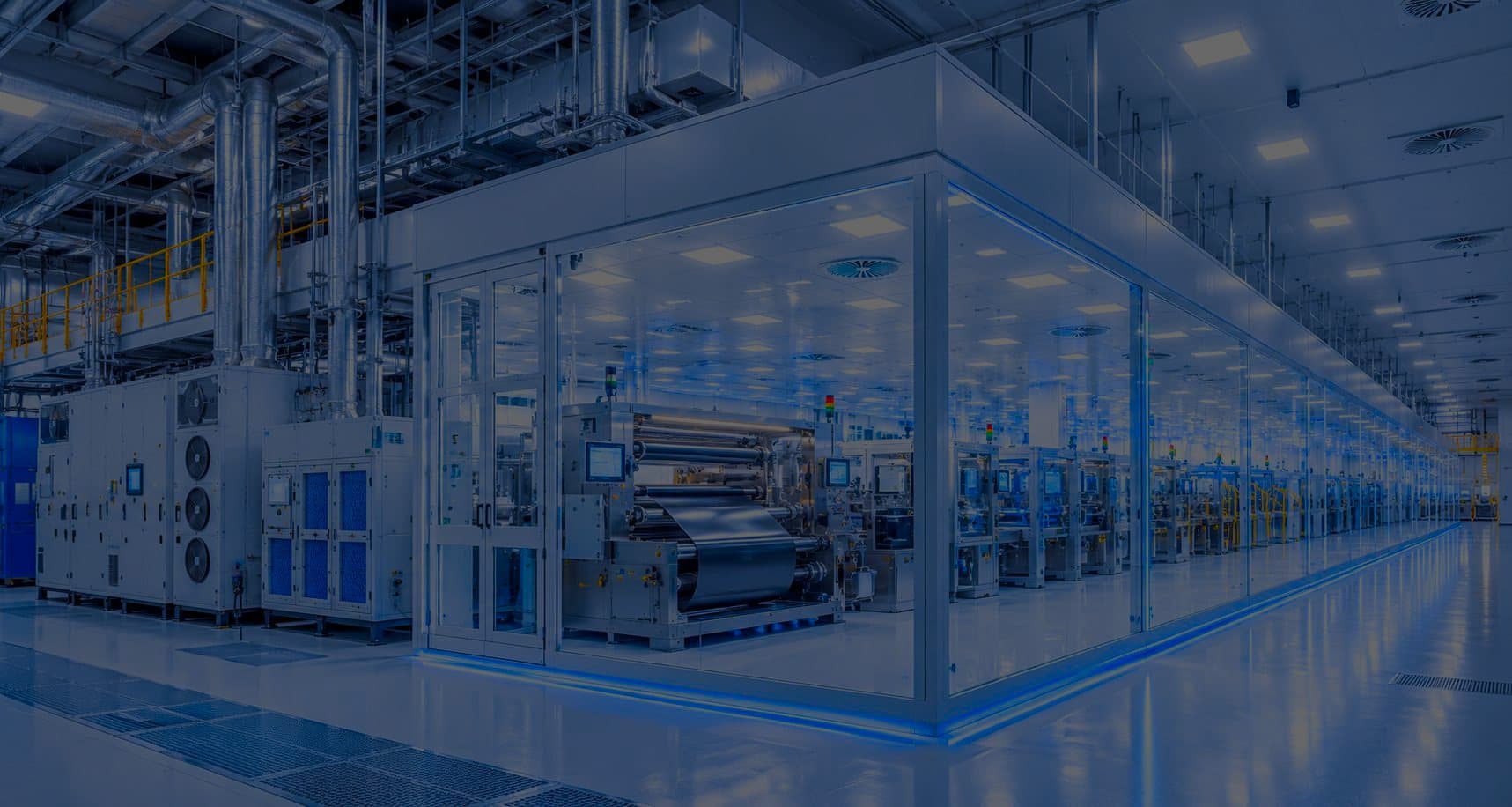
Learn moreControlled environments and robust power infrastructure for the energy transition — from battery gigafactory dry rooms to hybrid Solar–Wind–BESS systems engineered for efficiency, safety, and long-term performance.
Learn more

Sector by sector
Same disciplines, different acceptance criteria
Three sectors that look similar from outside and share almost no acceptance criteria.
All three build clean environments, and that is roughly where the similarity ends. A GMP suite is judged by an inspector against a written regulation, and its evidence has to be as good as its performance. A semiconductor fab is judged by yield, at particle sizes an order of magnitude smaller, with thermal and vibration tolerances that GMP rarely specifies at all. A battery dry room is judged by moisture, at dew points where conventional cooling-based dehumidification simply does not reach.
The engineering disciplines overlap heavily — air handling, filtration, controls, clean utilities, power. The acceptance criteria do not, and neither do the failure modes. Designing a fab the way you would design a sterile suite produces a facility that passes its classification test and loses wafers; designing a dry room on cleanroom logic produces one whose desiccant plant is sized for the wrong load entirely.
So the first question on any project is which regime governs, and where a product serves several markets, the most demanding requirement wins. That decision is recorded in the design basis before layout work starts, because it determines classification, evidence, testing and the qualification program that follows.
Side by side
What each sector is actually controlling
The same building services, measured against very different criteria.
| Sector | Judged by | What is being controlled | Measured against |
|---|---|---|---|
| Life Sciences | Judged byRegulatory inspection | What is being controlledViable and non-viable contamination reaching open product | Measured againstEU GMP Grade A–D, ISO 14644 classification, plus microbiological limits |
| Semiconductor | Judged byProcess yield | What is being controlledSub-micron particulate, molecular contamination, thermal and vibration drift at the tool | Measured againstISO Class 1–5 at 0.1 µm, AMC in parts per billion, stability held continuously |
| Renewable Energy | Judged byProduct quality and process safety | What is being controlledMoisture in cell manufacture; thermal window and gas evolution in storage | Measured againstDew point to −60 °C and below; cell temperature band and gas detection thresholds |
Questions
Choosing a sector approach
The underlying disciplines are the same — psychrometrics, airflow, filtration, controls, power — and they transfer well. What does not transfer is the acceptance criteria and the evidence each sector expects, so the sector-specific knowledge sits in the design basis and the qualification approach rather than in the calculations. Where a project needs specialist input we do not hold, we say so.
The most demanding of them, recorded explicitly in the design basis. Designing to the easiest and hoping to upgrade later is how facilities end up needing modification before they can supply a new market — and modification in a validated facility costs several times what the original provision would have.
Consistently, yes. Semiconductor work sets a habit of holding a tolerance continuously rather than passing a test on the day, which is exactly what an Annex 1 facility needs between requalifications. GMP work brings a documentation discipline that fabs and gigafactories increasingly want as their own customer audits get stricter.
These three are where most of our work sits, not the limit of it. Food, cosmetics, laboratories, data centers and precision assembly share the same engineering problems. Describe the environment you need to hold and what happens when it drifts, and we will tell you whether we are the right people for it.