

Multidisciplinary design that engineers performance, contamination control, and audit readiness into every facility.
Learn more
What we do
Services and Solutions
Humiley Group INC works across the whole facility lifecycle: design, project delivery, equipment built by qualified partners, and maintenance.
Four divisions, one team
Fully integrated solutions across the entire facility lifecycle
Because one team is accountable for all four, the design basis that governs a drawing is the one that governs the factory acceptance test and the maintenance task list five years later. That is where most of the coordination risk in a cleanroom build-out actually lives.

Disciplined EPCM delivery with PMBOK-aligned governance, from concept to qualified handover.
Learn more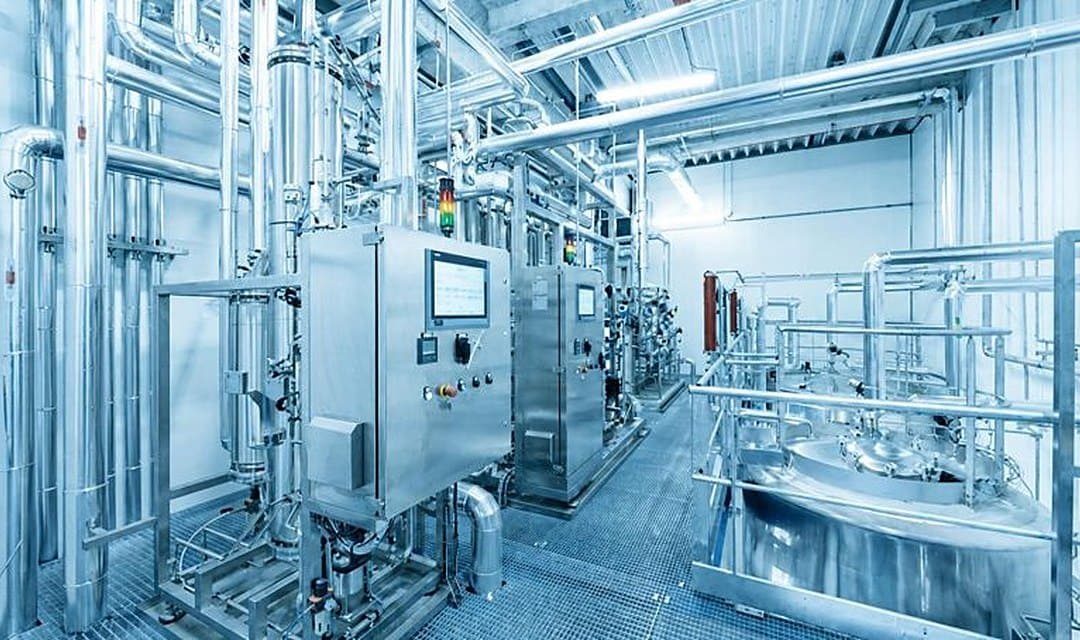
Pharmaceutical-grade HVAC and cleanroom equipment produced through qualified, EU-GMP-aligned manufacturing partners.
Learn more
Preventive and predictive maintenance, with 24/7 response under service agreement, that keeps critical systems compliant and running.
Learn moreHow we are organized
Four divisions, one accountable team
Four divisions, one accountable team. Many clients start with one and go on to use more.
The four divisions exist because facility work splits naturally into four kinds of accountability — deciding what to build, running the build, supplying the equipment that goes into it, and keeping it working afterwards. On most projects those sit with four different companies, and the boundaries between them are where cost and blame collect. A design assumption that was never tested against a real vendor's equipment. A qualification prerequisite nobody owned until commissioning found it missing. A maintenance regime written by people who never saw the design basis.
We run all four. That does not make us the right answer for every project — a client with a capable in-house engineering team and a trusted contractor may only need equipment, and we are happy to supply it. What it means is that when the divisions are combined, the handovers between them are internal, and the same design basis governs the drawing, the factory acceptance test and the maintenance task list five years later.
Start here
Which division you need
A short guide to where most inquiries actually belong. If none of these matches, describe the problem and we will tell you which does.
IfYou have a process and a site, and need to know what the facility should be
Engineering Solution & Consultancy
Requirements capture, concept options, layout and pressure regime, then a full design package through to Design Qualification.
Learn moreIfThe design exists and the project needs to be delivered on a date and a budget
Project Management
Stage-gate EPCM with a baselined schedule, earned value reporting and a documented route through commissioning and qualification.
Learn moreIfYou have a contractor and need equipment built to a qualified specification
Manufacturing & Distribution
Hygienic AHUs, fan filter units, HEPA housings, dehumidification, control panels and modular cleanroom systems, FAT-witnessed before delivery.
Learn moreIfThe facility is running and has to stay in its validated state
Maintenance Services
Criticality-based planned and corrective maintenance, condition monitoring, periodic requalification and calibration, with 24/7 coverage for facilities under a maintenance agreement.
Learn moreIfYou have inherited a facility, or a design, and are not sure what you have
Start with an assessment
A gap assessment against the User Requirement Specification and the applicable regulations, issued in writing with cost and schedule impact stated.
Learn moreHandovers
Where the divisions meet
The handovers are where facility projects usually lose time. These are the four that matter, and what we do to make each one survivable.
Design into procurement
A specification that no real vendor can meet is not a specification, it is a delay. Equipment is selected against the project's own calculated loads during design rather than after it, so what gets tendered is buildable at the price it was budgeted at.
Procurement into construction
Vendor drawings are reviewed against the design basis before fabrication, and long-lead items with qualification implications are released against approved documents. The alternative is discovering a mismatch when the unit is on site.
Construction into qualification
Qualification cannot start from an open punch list. Systems are commissioned, balanced and turned over package by package, so IQ begins from a verified installation rather than from an argument about what is finished.
Qualification into operation
The maintenance strategy is built from the asset register and criticality assessment produced during the project, not written from scratch by whoever inherits the building. The validated state carries forward instead of being re-established.
Questions
Working with us
No, and many clients do not. Each division takes work on its own — a design package for someone else to build, equipment for a contractor you have already appointed, or a maintenance agreement on a facility we had nothing to do with. Combining them reduces handover risk, which is worth most on complex or fast projects and worth less on a straightforward one.
Yes. On a lot of projects the client holds the process knowledge and the regulatory relationship, and we bring the facility engineering. What matters is agreeing where decisions sit before the work starts, so the design basis has one owner rather than two.
Design and project management are normally priced against a defined scope and deliverable list, so what you are buying is a set of documents rather than a period of time. Equipment is priced per unit against an approved specification. Maintenance is priced against the asset register and the response times agreed for each criticality band.
From a single air handling unit replacement in a running facility to a full greenfield GMP plant. The smaller work is often where a long client relationship starts, and we would rather do a small job properly than decline it.
An assessment or a study can usually begin within weeks. A full design package depends on the team the project needs and what is already committed. We will tell you the honest date rather than the one that wins the work — a design team that is oversubscribed produces the kind of package that costs you money on site.