
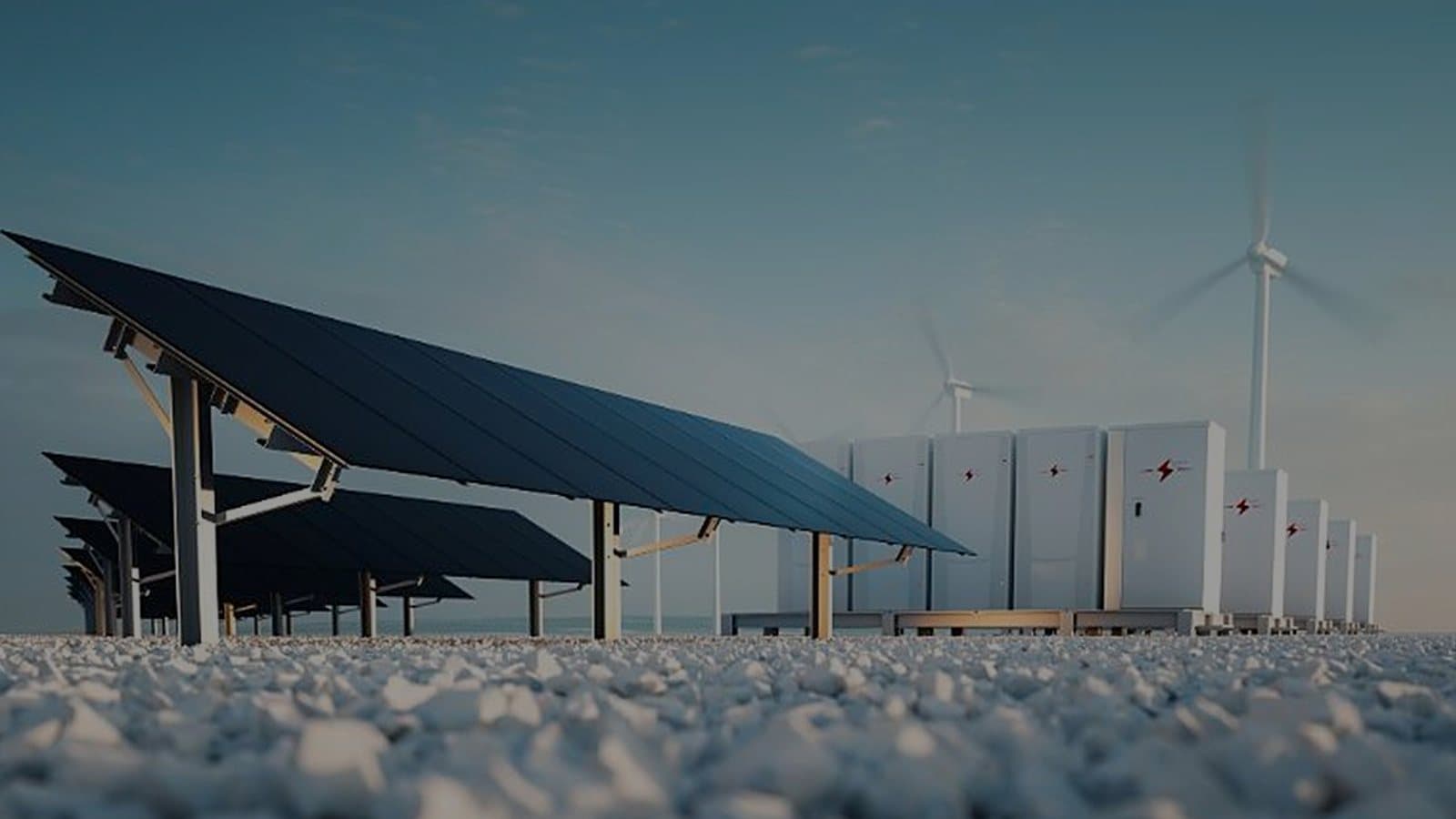
On many Solar–Wind–BESS sites, battery cooling is sized from the weather and every other auxiliary load sits in one allowance line.
Both habits come back after energisation. The auxiliary transformer runs hot, the UPS turns out too small, or a split unit gets bolted onto the control room after handover.
Battery cooling depends on how the plant is dispatched. Much of the heat in the cells is resistive, and resistive heat rises with the square of the current, so doubling the discharge current roughly quadruples that part of the heat. As an illustration, if the battery side loses 3% of a 1 MW discharge as heat, the HVAC has 30 kW to remove, and solar gain on a steel enclosure comes on top. Put the charge and discharge rates next to the hottest hours of the year before choosing the cooling duty.
The allowance line needs breaking up as well. Control and SCADA rooms carry their own cooling and an agreed UPS autonomy. Fire detection, gas detection and enclosure ventilation have to stay powered while other loads are shed. Lighting, security and site buildings come last. Give each a load, a supply and a backup case, and only then pick the auxiliary transformer.
Humiley designs LV–MV power up to 22 kV together with the HVAC and SCADA for renewable and BESS facilities.
Talk to an engineer: contact@humiley.com · +84 28 7777 6668 (Viet Nam office)
Industries

