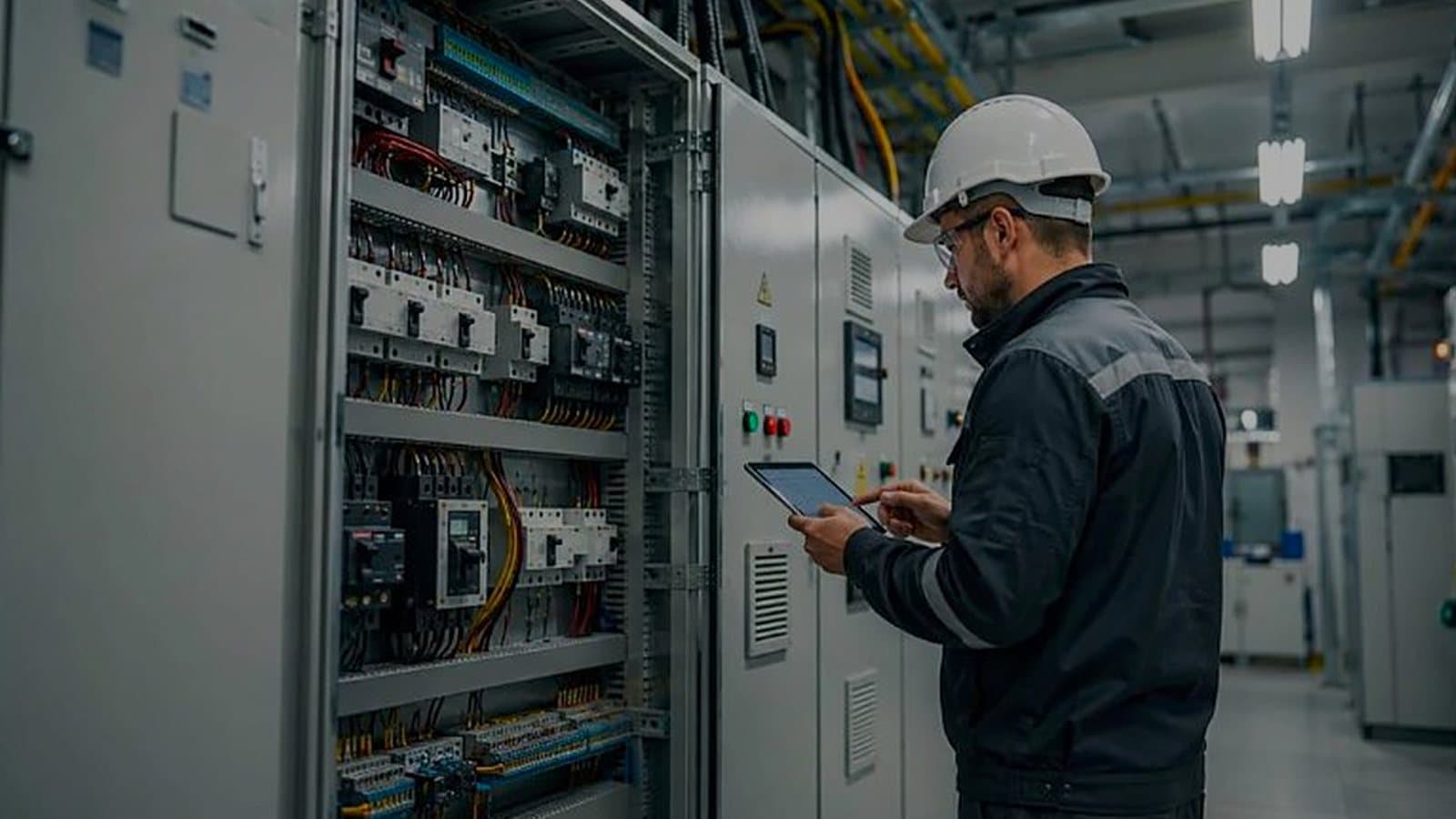
A power quality meter on an EC fan wall at night reads 40% THDi, and the screenshot goes straight to the electrical consultant.
Before anyone orders a filter, look at what that percentage is divided by.
THDi is harmonic current as a share of the fundamental current flowing at that moment. At night the fan wall is turned down, the fundamental is small, and the same harmonic amps become a big percentage.
IEEE 519-2022 puts its current distortion limit on TDD at the point of common coupling (PCC): harmonic current as a share of the maximum demand load current there.
A worked example. 40% THDi on 10 A of fundamental is 4 A of harmonic current. At a PCC with a maximum demand current of 100 A, those 4 A are 4% TDD.
Whether 4% passes depends on the site. The TDD limit in IEEE 519 is not one number; it steps with the ratio of short-circuit current to load current (ISC/IL) at the PCC, so the same reading can comply at a stiff supply and fail at a weak one.
None of this makes fan walls harmless. A 6-pulse EC drive with a DC choke still draws 35–42% THDi at full load, and a plant full of them adds up. The decision on active filtering should come from a study at the PCC using maximum demand and the site's ISC/IL, not from a night-time reading on one feeder.
Topics