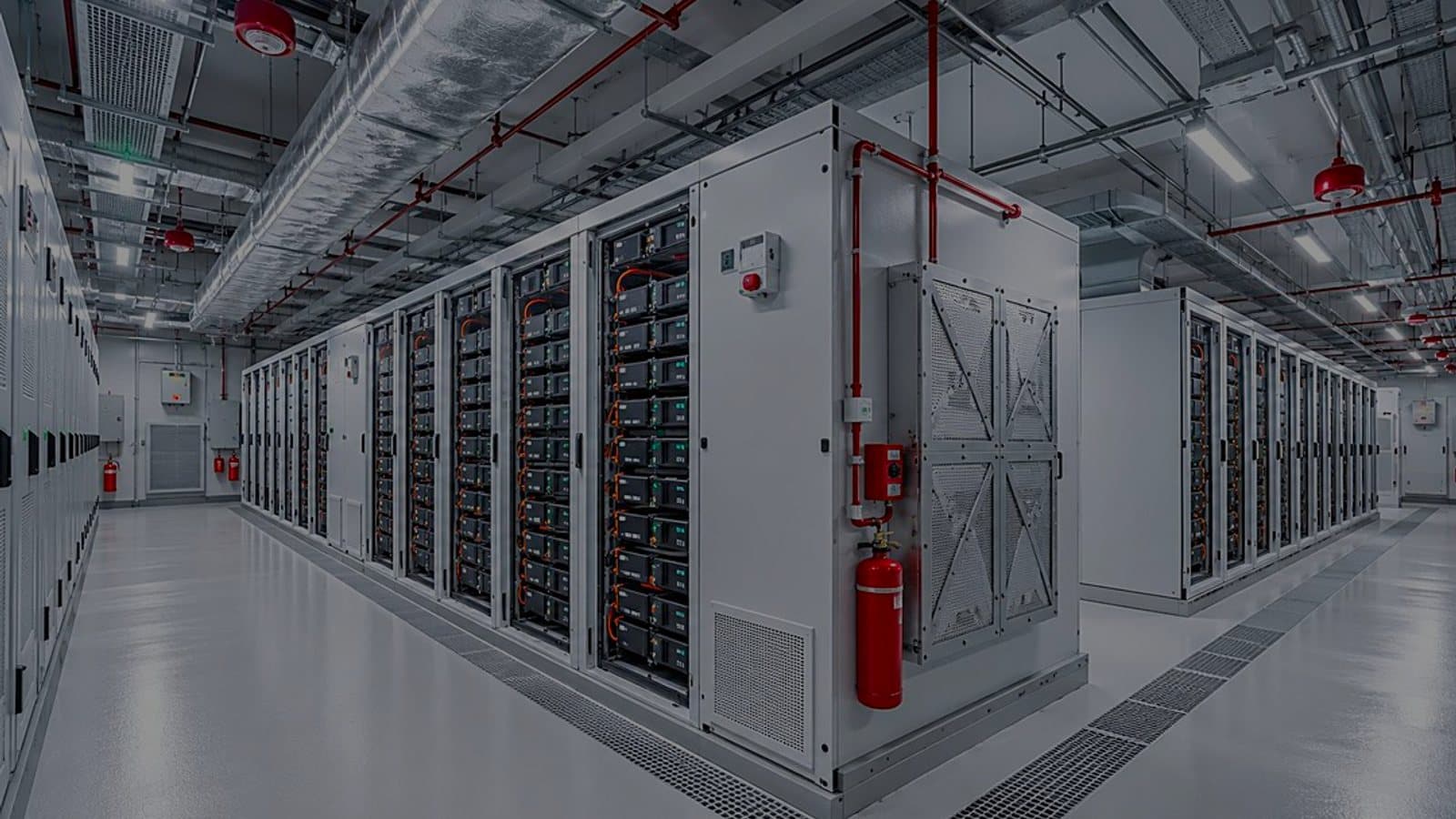
Ask what drives the size of a dry room's dehumidification plant and the intuitive answer is the process — the moisture released by materials, people and equipment. In a gigafactory dry room held at −40 °C dew point or below, the intuitive answer is usually wrong. The dominant load is infiltration: ambient air leaking in through the envelope, every hour, carrying far more water than the process ever will.
The numbers are unforgiving
At −40 °C dew point the air holds roughly 0.1 g of water per kilogram. At −60 °C it is around 0.01 g/kg. Outdoor air in a humid climate carries twenty grams per kilogram or more. Every kilogram that leaks in has to have essentially all of its moisture removed, continuously, by a desiccant system whose reactivation heat is one of the largest energy consumers in the building.
That ratio is why envelope tightness is an engineering parameter in a dry room rather than a construction quality aspiration. A leakage rate that would be unremarkable in a cleanroom can double the plant.
Where the air actually gets in
Penetrations. Every duct, pipe, cable and sprinkler crossing the envelope is a potential path. They need a sealing detail specified at design and inspected at installation — and, critically, a detail that accommodates movement, because a rigid seal between components that move at different rates opens within a year.
Panel joints. A modular envelope is only as tight as its jointing system and the care taken installing it. This is a place where inspection during construction pays for itself many times over, because it cannot be corrected afterwards without dismantling.
Doors and personnel entry. Every opening admits a slug of ambient air that the plant then removes. Airlock design, door interlocking and the entry protocol are load-reduction measures, not just contamination-control measures.
Vapor drive through the construction. At these dew points the vapor pressure differential across the wall is extreme and continuous. The vapor barrier must be intact and, just as important, on the correct side of the construction.
Zone before you size
The cheapest cubic meter of dry air is the one you never condition. Not every part of a cell plant needs −60 °C, and the areas that genuinely do are usually smaller than the initial layout suggests. Separating the ultra-low dew point zones from the merely dry ones, and both from the general factory, reduces the load before a single piece of plant is selected. Zoning decisions made at the layout stage have more effect on lifetime energy cost than any subsequent optimization of the equipment.
Then design the reactivation
Once the load is as small as the process allows, the desiccant system's reactivation energy becomes the thing to attack: pre-treatment to remove the easy moisture with cooling before the desiccant does the hard part, and heat recovery on the reactivation air stream. Attacking reactivation energy before reducing infiltration is optimizing the wrong term.
Industries