Low-level returns only work if the wall has room for the duct behind the grille.
The airflow case for them is simple. Supply comes down from the ceiling, sweeps past the work and leaves near the floor, taking particles with it. Returns high on the wall let the same air turn over above the bench instead. A smoke study shows the difference in about a minute of footage.
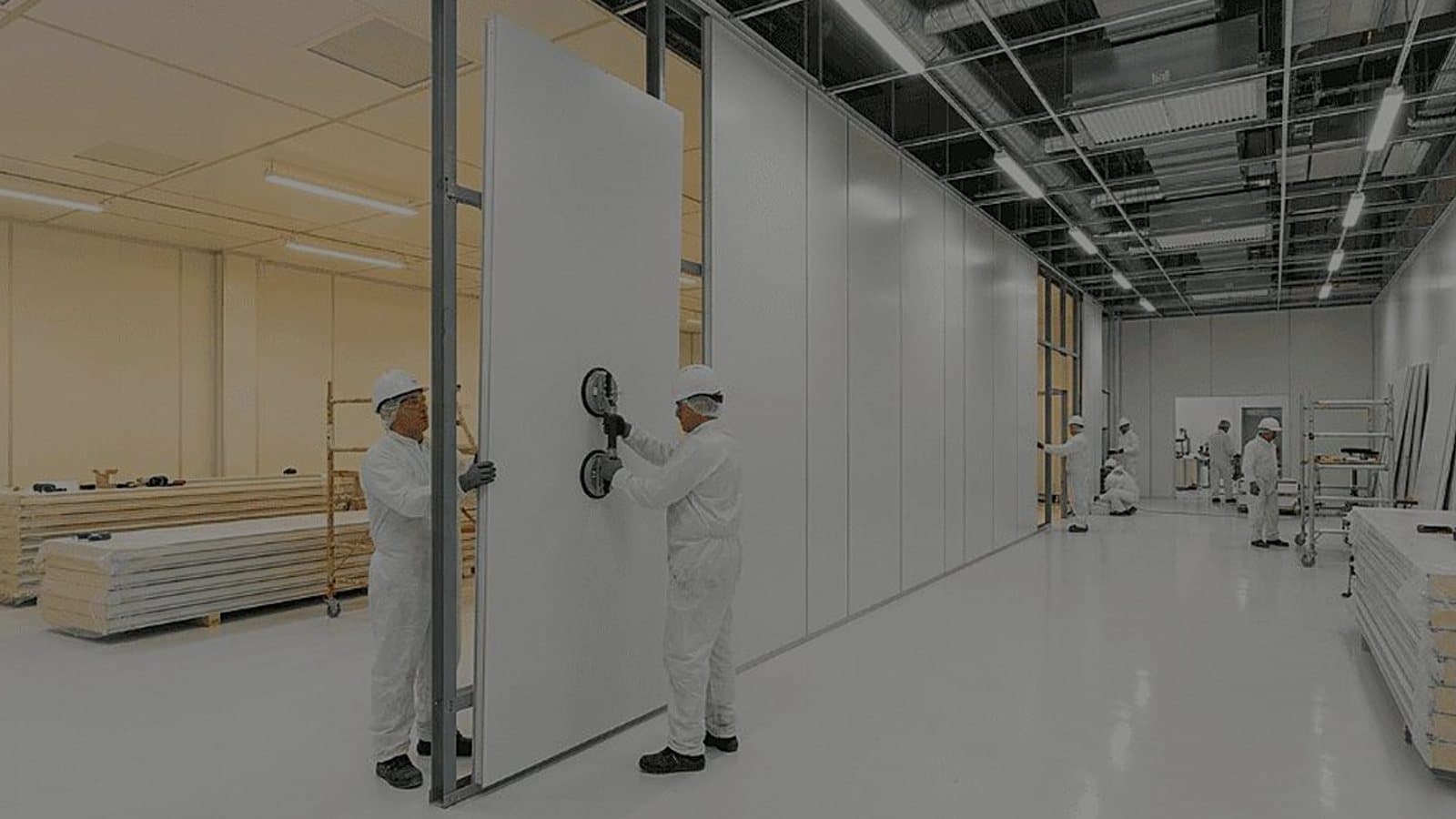
The building side is where layouts go wrong. A grille near the floor needs a riser up to the ceiling void. In a stud or masonry wall that riser becomes a boxed-out column added late, with corners to clean and a joint to seal. Some modular cleanroom wall systems can carry the return path inside the panel, flush with the room face, which avoids the ledges; whether yours can is a question for the panel supplier before the layout is drawn.
Three details decide whether it stays clean:
The grille lifts off without tools, so the cavity behind can be wiped, not just the face.
Returns are spread along the walls, not bunched in one corner, and never behind equipment that will block them.
The panel joint around the grille is sealed like every other joint in the room.
Settle the returns when you lay out the walls, before the equipment layout is frozen. Cleanroom panels and modular walls are part of our AeroSano range, built by qualified manufacturing partners under Humiley engineering control.
Topics