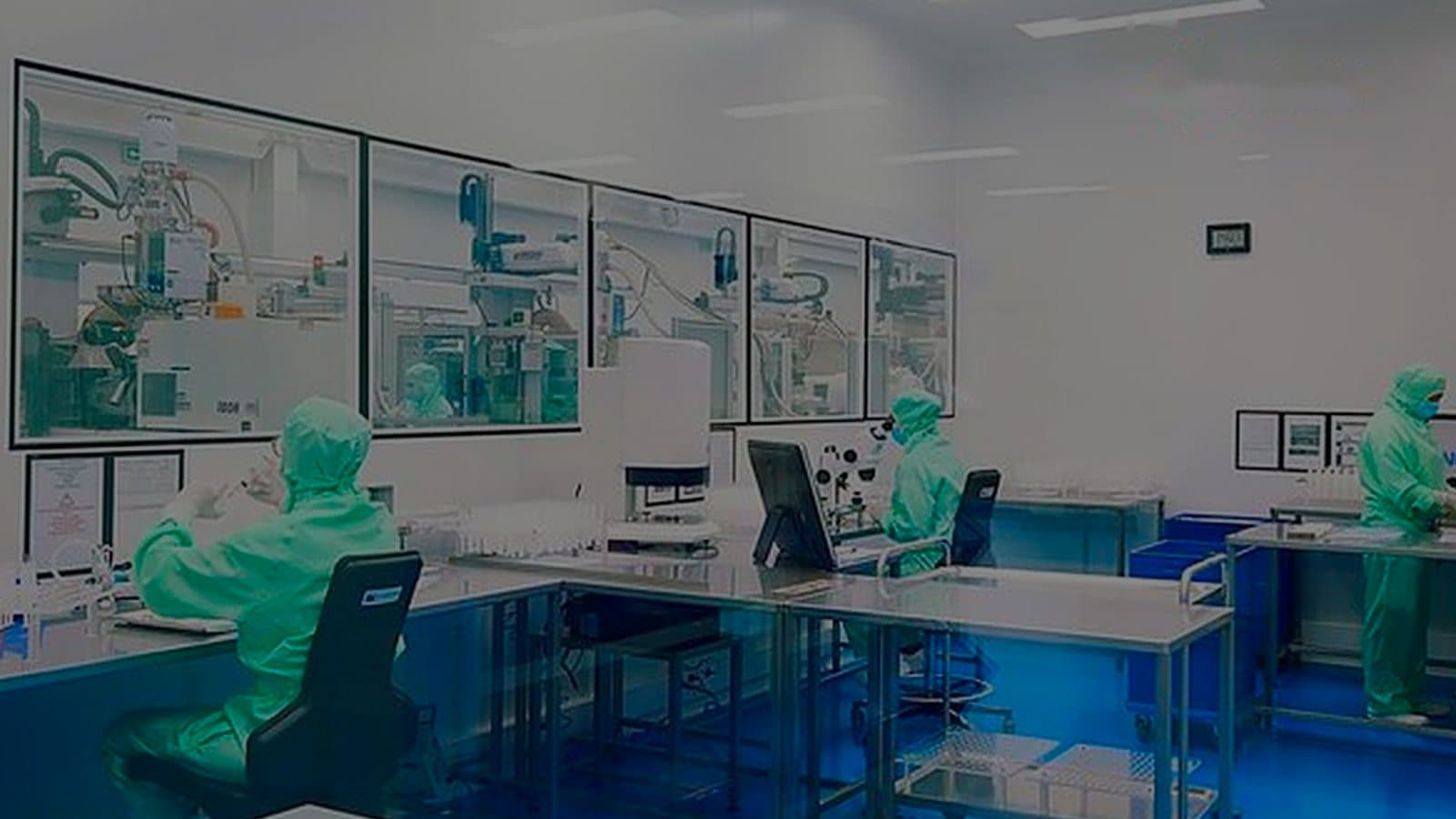
For a potent compound, the HVAC scope follows one earlier decision: whether an operator ever handles open powder.
Where powder is handled open, the room carries the containment. That means a negative pressure regime towards the corridor, airlocks that hold the cascade when doors open, HEPA filtration on the exhaust and often on the return, and degowning routes laid out so powder on a suit does not walk out. Operators rely on PPE.
Put the same step in an isolator or behind closed transfer valves and most of that burden moves to the equipment. The room keeps a pressure regime and airlocks, but its design is now driven by the moments the barrier opens or fails: a glove breach, a transfer port connection, cleaning, a change of the isolator's exhaust filter.
Two things make the choice checkable. Write the occupational exposure limit into the URS in µg/m³, not only the OEB band, because band scales differ between companies. Then ask the equipment supplier for containment data from surrogate powder testing to the ISPE SMEPAC guide, reported as an airborne concentration you can set against that limit.
Many plants mix both, with closed dispensing next to open tablet compression, and each suite gets its own room design.
We engineer high-potency and containment suites, including high-OEB oncology, as part of our Life Sciences work.
Industries