
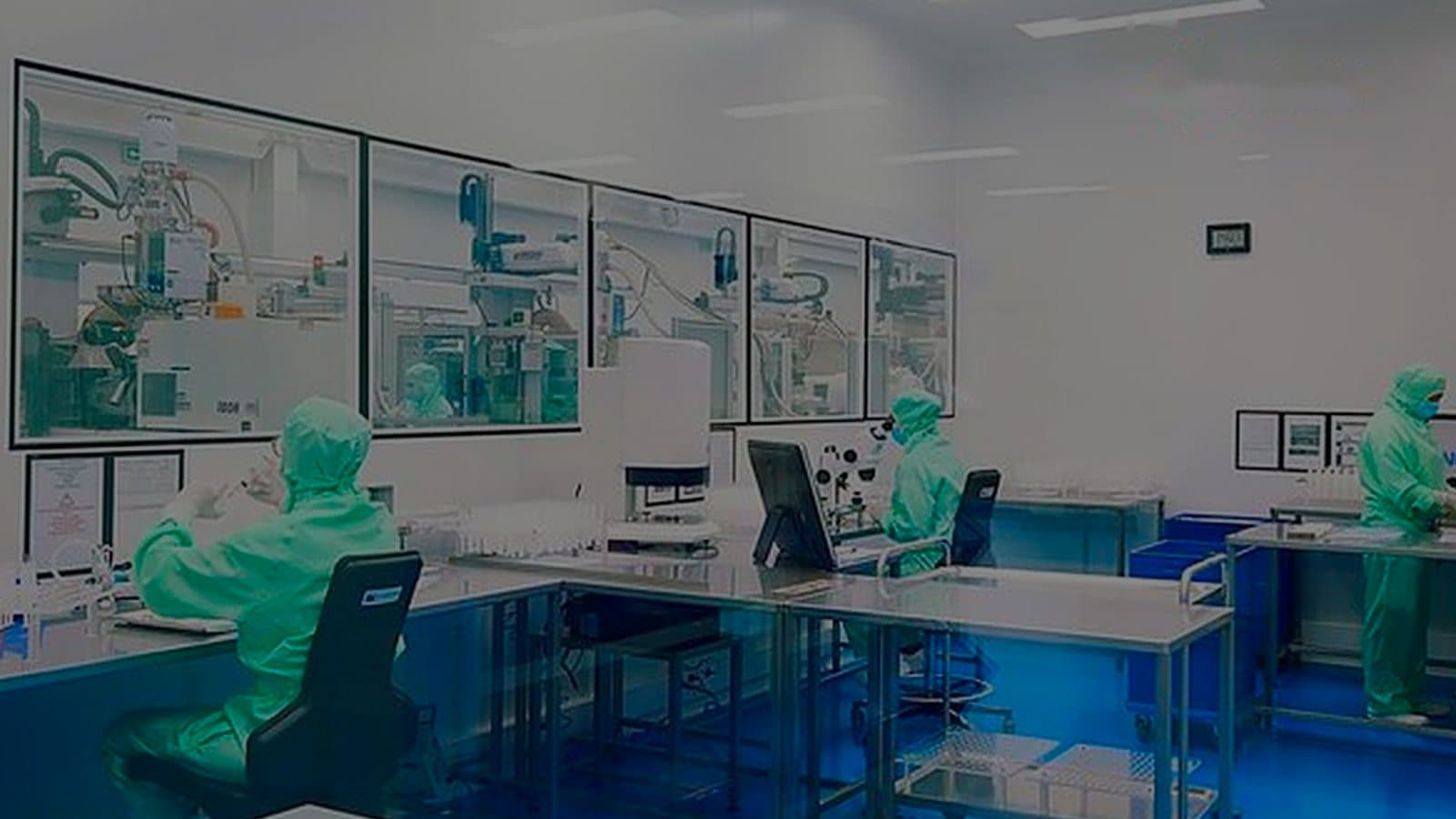
The suite held −15 Pa all day. What the operator breathed during the bag change was never measured.
Room pressure answers one question: which way air moves across the door and the wall. A negative room pulls air in through its leaks, so what is airborne tends to stay inside. That protects the corridor.
It says nothing about the cloud at the source. When a liner is cut open or a drum is tipped into a charging chute, powder is airborne within arm's reach of the person doing it. The pressure trend looks the same on a day with a clean transfer and on a day with a spill.
Two other measurements cover the rest. Operator exposure is shown by air sampling in the breathing zone during the real task, compared with the occupational exposure limit of the compound. The containment performance of the equipment is verified by a surrogate powder test: a harmless powder such as lactose is handled through the full operation while samplers run around the equipment and on the operator. The ISPE Good Practice Guide on SMEPAC sets out the method.
So when a containment suite is handed over, ask for the sampling report as well as the pressure log.
Industries

