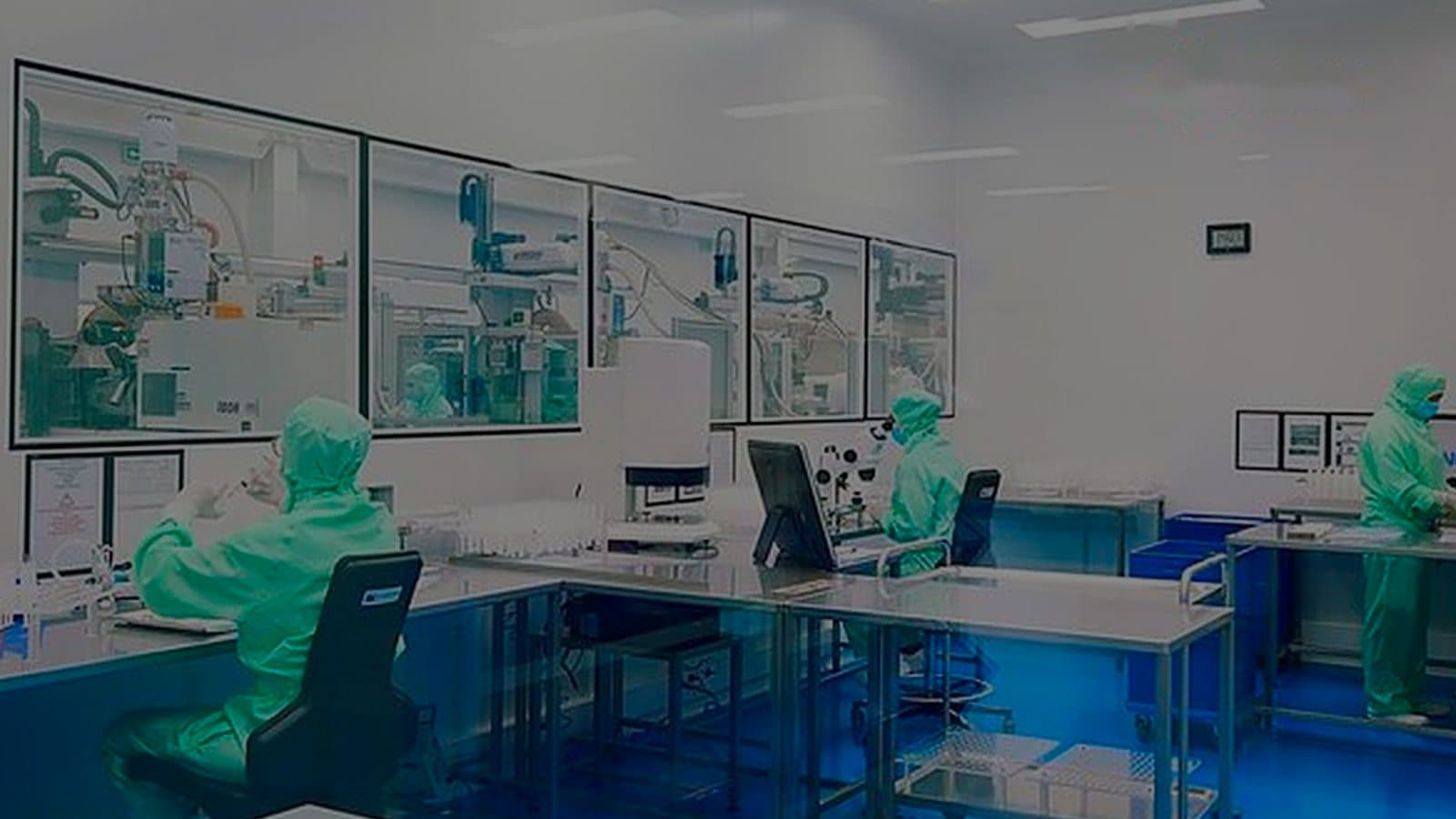
On a potent-compound suite, the exhaust HEPA is the last barrier between the powder and the outside, and the one least often scanned.
It is usually an H14: at least 99.995% at the most penetrating particle size.
Supply filters get the attention because they protect the product. They are leak tested at installation and at every requalification, and a failed scan stops production. Exhaust filters on high-potency suites protect people and the neighbourhood, and they are easier to overlook. They sit in a plant room, sometimes in a bag-in/bag-out housing that is awkward to test, and the efficiency printed on the label is taken as the evidence.
That 99.995% is an EN 1822 rating of the filter element, measured in the filter factory. It says nothing about the seal between the element and your housing. A gasket that has not seated, a clamp left loose or a frame that leaks around the filter sends air past the medium.
So the installed leak test belongs on the exhaust side too, and the housing has to be designed for it from the start: upstream aerosol injection, and a downstream scan or sample port that can be used without breaking containment. A bag-in/bag-out housing bought without those ports cannot be tested properly later.
High-potency and containment suites, including high-OEB oncology, are part of the life-sciences work we do.
Topics
Industries