
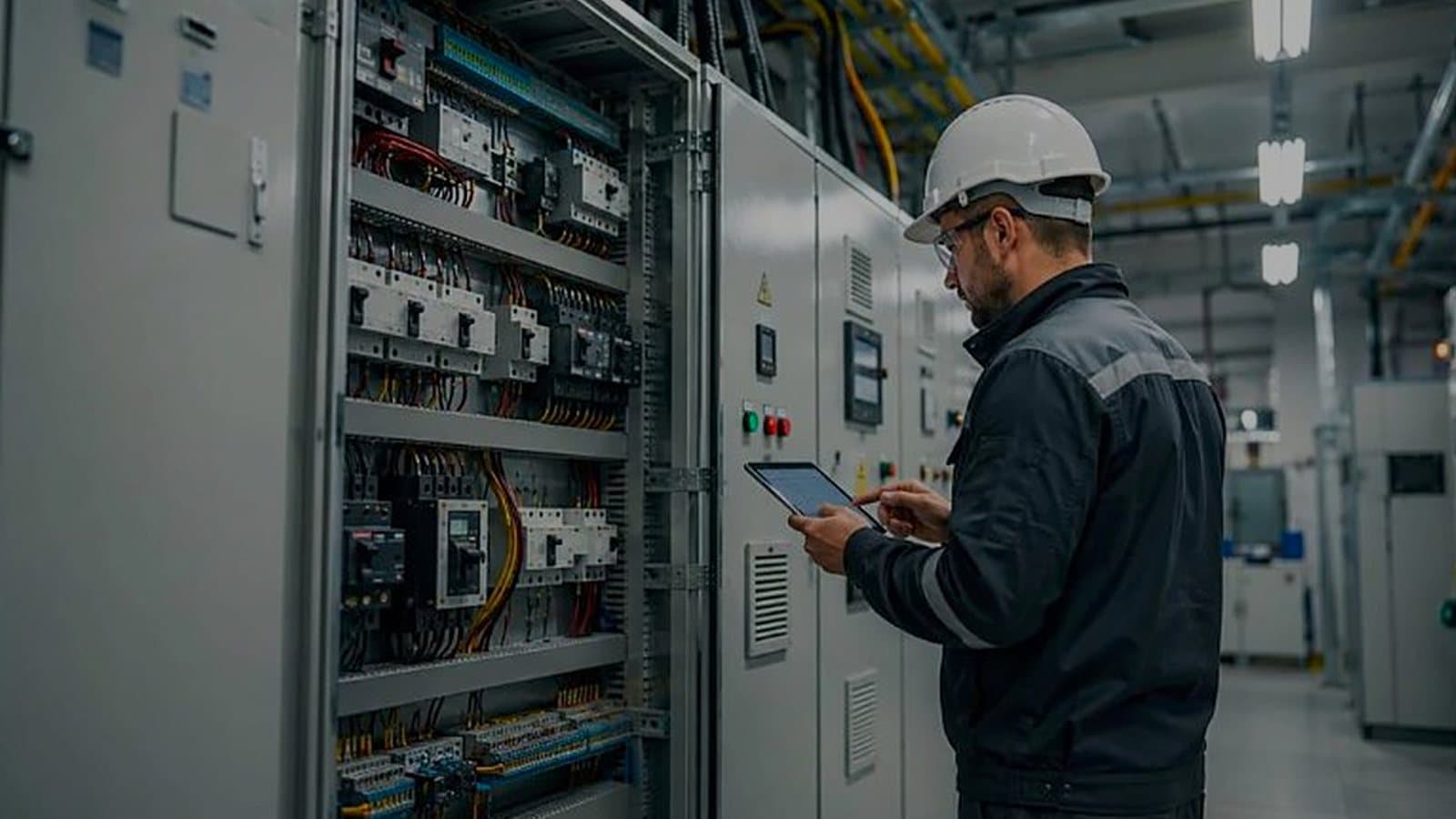
The form of separation in an MCC decides whether one feeder can be isolated while the rest of the board keeps running.
IEC 61439-2 defines four forms of internal separation, most with a and b sub-types.
Form 1 has no internal separation. Open the door and everything is exposed.
Form 2 separates the busbars from the functional units.
Form 3 also separates the functional units from each other; the outgoing terminals are not separated from one another.
Form 4 separates the terminals as well, so each feeder, from its device to its cable terminations, sits in its own compartment.
In a GMP plant running around the clock, the difference shows when an AHU motor starter fails. A Form 4 board, ideally with withdrawable units, makes it possible to isolate that one feeder and keep the other AHUs running. Whether anyone may then work beside energised sections is a separate decision for your site's electrical safety rules and risk assessment; the form provides barriers, not a safe system of work. In a Form 1 or 2 board the safe answer may be to shut the section down, and with it the pressure cascade in every room it serves.
Form 4 costs more panel space and copper. Our view: specify it for boards feeding systems that hold a validated state, and accept Form 2 where a shutdown only stops a comfort load.
Our control panels and MCC/MDB are built to IEC 61439 by qualified partners under our engineering control, and every unit is FAT-witnessed.

