A failing lithium-ion cell vents hydrogen, CO, CO2 and solvent vapour before it burns. Hydrogen's LFL is 4% by volume, and exhaust is commonly sized to stay below 25% of the LFL. The first gas alarm should start the exhaust and isolate the rack; suppression release comes last.
HEPA and ULPA filters do not stop airborne molecular contamination, and an AMC limit written only as "1 ppb" is a different mass for every compound: about 0.70 µg/m³ for ammonia, 1.49 µg/m³ for hydrogen chloride. A fab URS should name the compound, the unit with its reference temperature, and the sampling method.
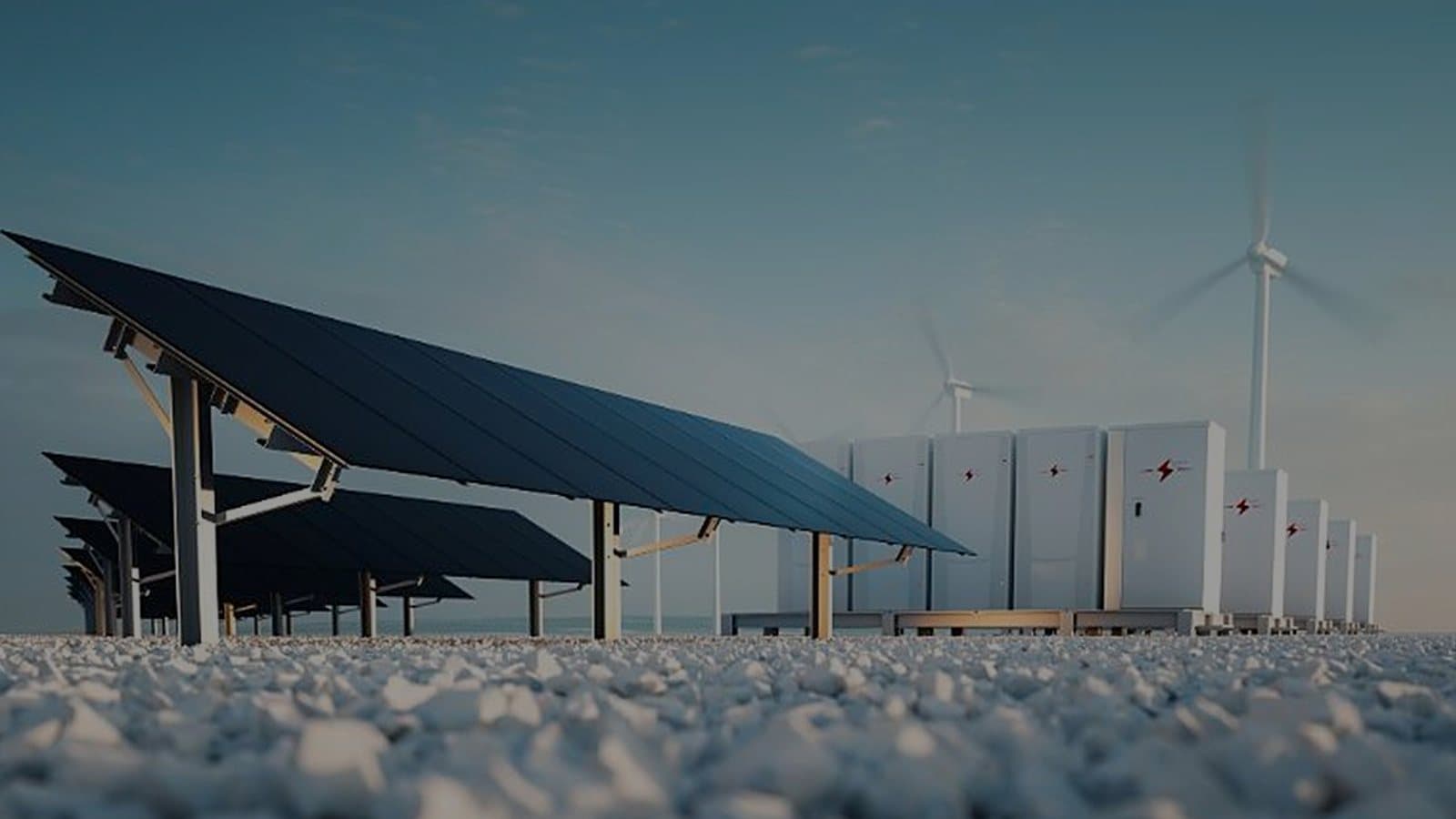
Hybrid renewable sites often size battery cooling from the weather and lump the other auxiliaries into one allowance. Resistive heat in the cells rises with the square of the current, and a 3% loss on a 1 MW discharge is 30 kW of heat. Control rooms, fire and gas safety and site services need their own lines.
Liquid-cooled battery racks move most heat outside, so the enclosure unit looks small on paper. But 18 °C coolant pipes sit inside, and on a wet afternoon outdoor air near 26 °C dew point comes in with every maintenance door opening. Specify an enclosure dew point limit below the coldest pipe.
Wind-driven rain past a plain louvre soaks the first filter stage of a fresh-air AHU. A 10,000 m³/h intake needs about 1.4 m² of louvre at 2.0 m/s, or 2.8 m² at 1.0 m/s, and the slower louvre admits less water. Add a drained plenum, a cleanable screen and an ISO Coarse first stage.
Hydrogen is flammable from about 4% by volume and pools in roof pockets that a ridge detector cannot see, so electrolyser roofs are detailed without pockets or each pocket is vented and detected, with alarms at 10% and 20–25% LFL. In battery rooms, rack-level off-gas sensing matters for what it switches.
Each kilogram of electrolytic hydrogen needs at least 9 kg of water, and at 75% RO recovery that means 12 kg of feed. Pharma water habits such as sampling plans, trended conductivity and buffer storage transfer well. A WFI-style loop may not: build to the electrolyser supplier's feedwater specification.
Many investors mistakenly view a Battery Energy Storage System (BESS) as merely a giant "backup generator" or a passive power bank. This view overlooks its true potential. In reality, BESS is a powerful financial and engineering…
Renewable energy suffers from a fatal flaw: Intermittency. The sun only shines during the day, and the wind is unpredictable. Relying on just one source often requires a massive, costly Battery Energy Storage System (BESS) to bridge the…
Solar energy isn’t just about reducing electricity costs. It’s also a more environmentally friendly choice. Every solar system installed means less dependence on electricity generated from fossil fuels. Fewer emissions. Less noise. Less…