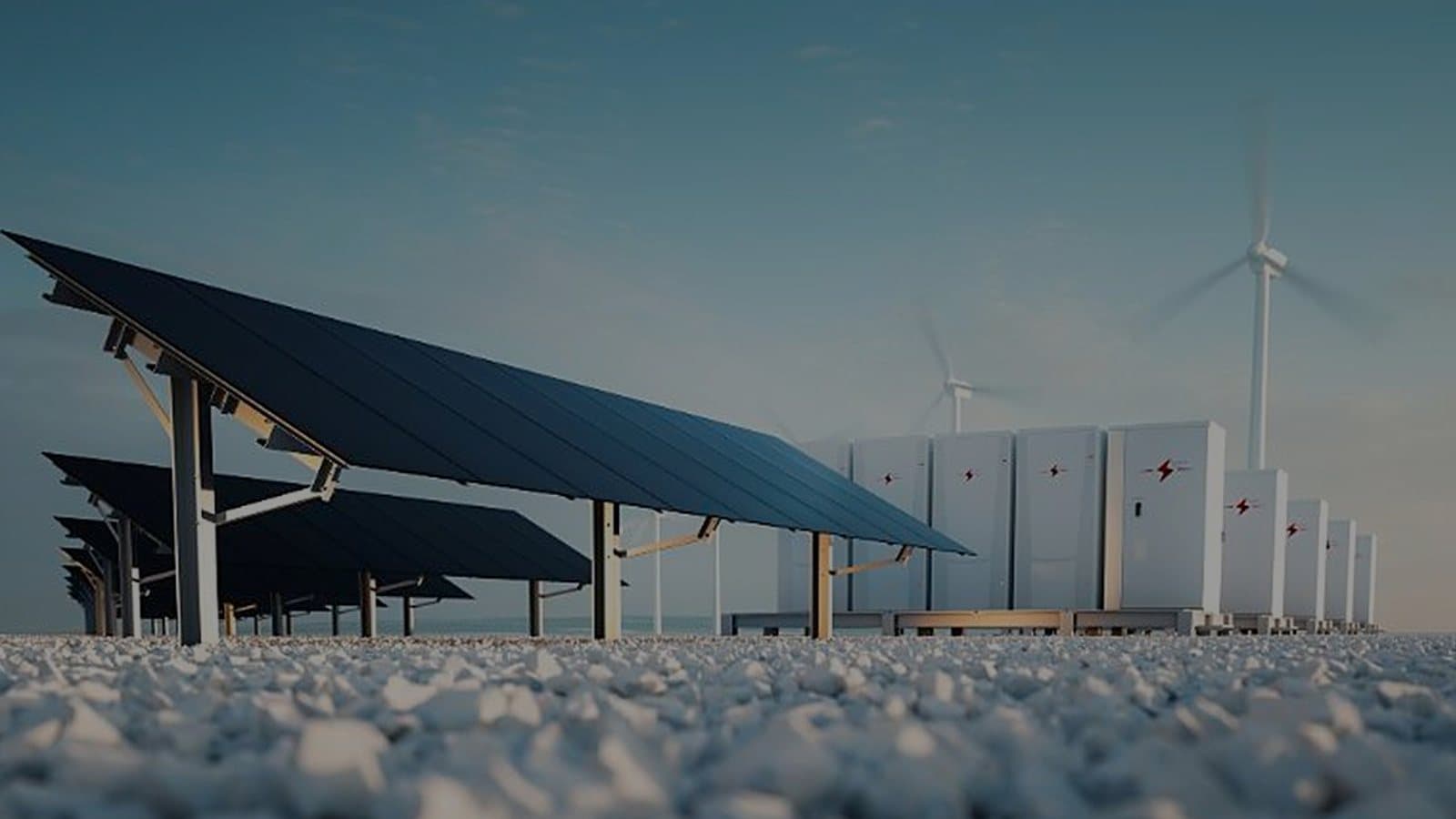
BESS thermal management, gas detection, explosion control and suppression often come from four suppliers, and each changes what the others must handle. Issuing the UL 9540A report with all four packages, naming one interface owner and choosing explosion control from the test data keeps them working as one system.
By ASHRAE's occupant table, light bench work releases about 140 W of latent heat per person, roughly 200 g of water an hour. Ten operators add about 2 kg an hour to a room at −60 °C dew point. Size the dehumidifier on peak headcount, including shift changeover, and write gowning assumptions into the design basis.
A capacitive dew-point sensor at a typical ±2 °C can read −58 °C in a room at −60 °C, and it drifts most after wet air gets in. A chilled mirror, typically around ±0.2 °C, makes a good reference. Keep every comparison and set each sensor's calibration interval from its own drift.
In a Li-ion dry room at −60 °C dew point and below, extra air changes do not help: return air often passes back through the desiccant rotor, so more supply air means a bigger rotor and more regeneration heat. Size airflow from the moisture balance; pressure control, airlocks and envelope sealing carry over from pharma.
A cooling coil dries air only to about its fin temperature; below 0 °C the fins frost. Dry rooms rely on desiccant rotors, down to −60 °C dew point, with a precooling coil removing bulk moisture cheaply first. Where that split sits sets most of the dry room's energy bill.
NMP's lower explosive limit is about 1.3% by volume. Held below 25% of it, an oven evaporating 100 kg/h of NMP needs around 7,500 m³/h of exhaust. The make-up air, its dew point and the coating hall to dry room pressure step should be sized from the same evaporation figure.
At −60 °C dew point a coil would freeze, so a desiccant rotor does the drying and regeneration air, often heated to around 120–140 °C, is the running cost. Pre-cooling ahead of the rotor, heat recovery, staging with the real crew size and a tight envelope are all set at design stage.
A failing lithium-ion cell vents hydrogen, CO, CO2 and solvent vapour before it burns. Hydrogen's LFL is 4% by volume, and exhaust is commonly sized to stay below 25% of the LFL. The first gas alarm should start the exhaust and isolate the rack; suppression release comes last.
HEPA and ULPA filters do not stop airborne molecular contamination, and an AMC limit written only as "1 ppb" is a different mass for every compound: about 0.70 µg/m³ for ammonia, 1.49 µg/m³ for hydrogen chloride. A fab URS should name the compound, the unit with its reference temperature, and the sampling method.
Hybrid renewable sites often size battery cooling from the weather and lump the other auxiliaries into one allowance. Resistive heat in the cells rises with the square of the current, and a 3% loss on a 1 MW discharge is 30 kW of heat. Control rooms, fire and gas safety and site services need their own lines.
In a dual-unit dry-room specification, −60 °C dew point converts to −76 °F with the 32 offset, but a ±2 K tolerance is ±3.6 °F, converted with the 1.8 factor alone. Deadbands and rates of change follow the same rule. Round both columns alike and state which one governs.