
Grade C air has a microbial action limit of 100 CFU per cubic metre, a figure no particle counter can report.
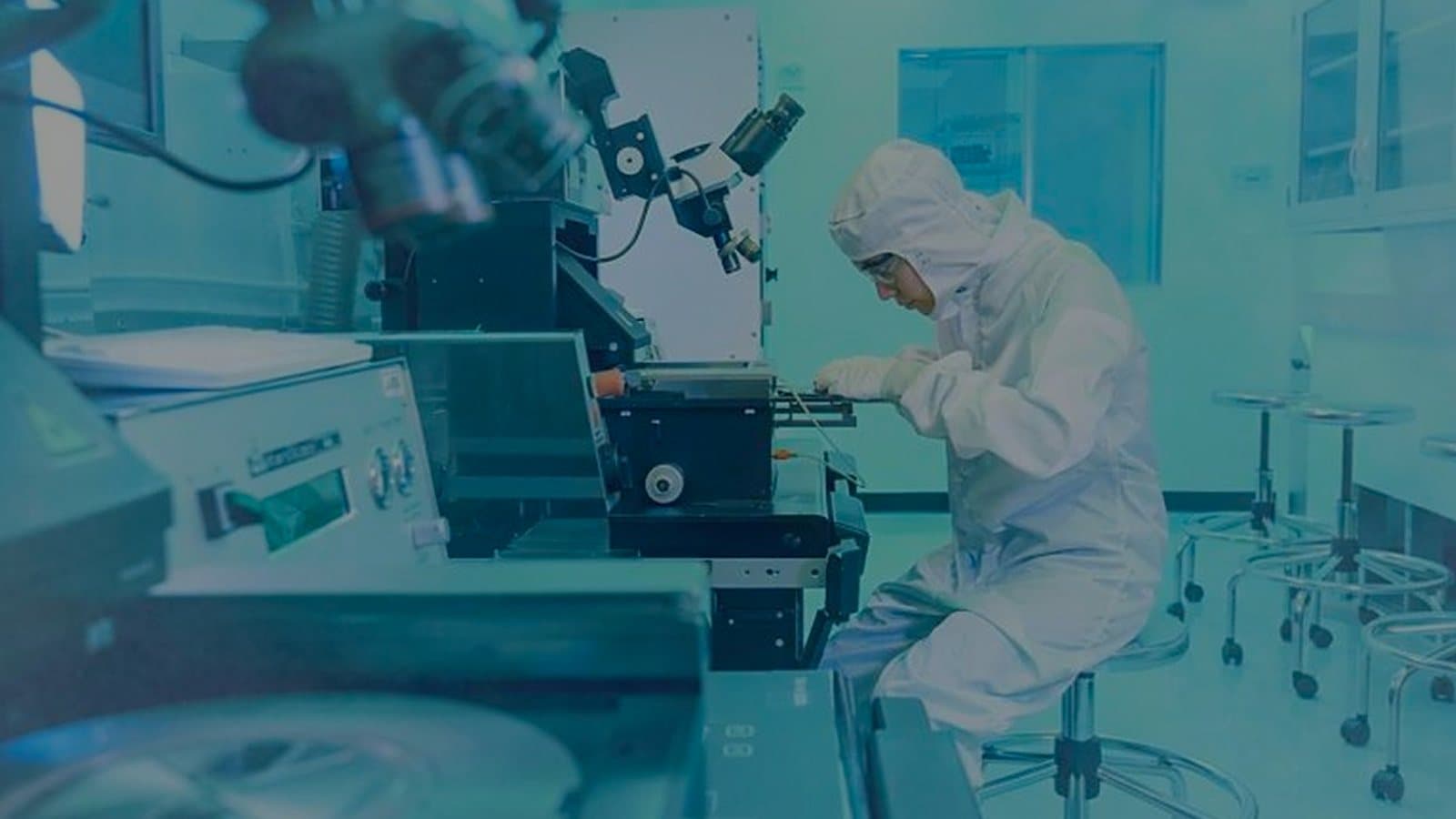
Semiconductor engineers joining a pharma project tend to read Grade C by its particle class. ISO 7 at rest and ISO 8 in operation looks loose next to the ISO Class 1 to 3 cleanrooms they are used to, and on particles alone it is.
Annex 1 asks for more than particles. Its Table 6 sets Grade C limits of 100 CFU/m³ in air, 50 CFU per settle plate over 4 hours and 25 per contact plate. The organisms arrive on people and materials, and the room is wiped with disinfectant, sporicide included. The floor shows what that does to the design. Many fabs return air through a perforated raised floor, which suits unidirectional downflow and leaves a void beneath that nobody can wipe. A Grade C floor is usually a continuous sheet or resin finish coved up the wall, so the disinfectant reaches every joint. The CCS is where choices like this are argued together.
Unidirectional flow over exposed product and tight pressure control transfer almost unchanged. A passing particle count is only part of the Grade C record.
We design semiconductor cleanrooms down to ISO Class 1 as well as EU-GMP and WHO-GMP plants, so we see this move from both sides.
Industries

