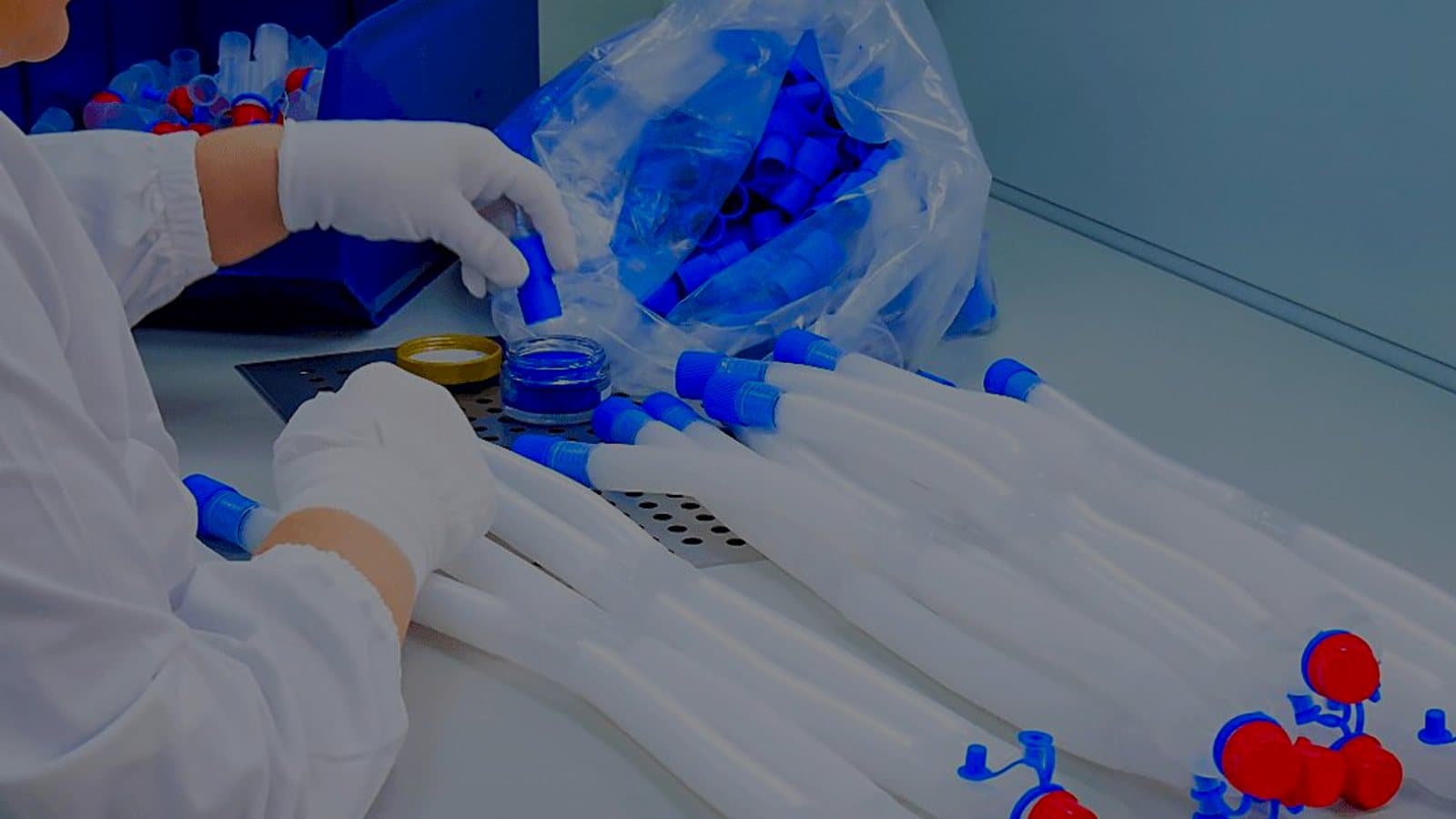
In cell and gene therapy, an open step needs Grade A air, usually in a Grade B background with the gowning and air volumes that come with it. A proven closed process can justify a lower background grade. Map every step that opens the product before fixing room grades and HVAC size.
EU GDP expects initial temperature mapping of a storage area before use, under representative conditions. Mapped empty, a hot spot is a design finding. Mapped full, it is a deviation with product exposed. Agree what representative means early, plan the seasonal repeat, and remap after significant changes.
QC labs receive samples from graded production rooms, handle open cultures and run fume hoods that shift the room balance. Each is an air-direction decision that belongs in the Contamination Control Strategy. Put the labs and the sample route on the same cascade drawing before the lab HVAC is sized.
At 0.45 m/s, each square metre of Grade A unidirectional airflow moves about 1,620 m³/h. A 6 m² zone needs 9,720 m³/h; the whole 30 m² room would need 48,600 m³/h. Drawing the Grade A boundary tightly around exposed product is an energy decision.
A tablet press's dust extraction pulls air out of the compression room; leave it off the room data sheet and the corridor pressure shifts whenever it runs. Granulation adds moisture and sometimes solvent, coating adds heat and its own air system. List every load before sizing supply air.
An incomer meter gives the HVAC total, not which AHU spends it. Meter chilled-water energy on each AHU coil, fan power per AHU, reheat per unit or zone, and chiller plant power against chilled-water energy. Log a full year, dry and wet season, before claiming any saving.
The sterilisation route sets the filling room grade and most of a sterile line's HVAC cost. Terminally sterilised products typically fill in Grade C; aseptic filling needs Grade A over a Grade B background or an isolator, with monitoring and process simulations. Fix the route before the layout.
In a potent-compound suite, open powder handling makes the room the primary containment; an isolator or closed transfer moves most of it to the equipment. Write the exposure limit into the URS in µg/m³, not only the OEB band, and ask for surrogate powder test data to set against it.
In the EU a named Qualified Person certifies each batch under Directive 2001/83/EC and EU GMP Annex 16; in the US the quality control unit approves or rejects under 21 CFR 211.22. For an HVAC excursion, both want the trend, the product impact assessment and the alarm audit trail.
Annex 1 initial validation of an aseptic process needs at least 3 consecutive successful simulations covering all working shifts, then periodic runs twice a year per process, line and shift. The cleanroom must hold its qualified state throughout. Agree an HVAC freeze date with QA, and list in advance which jobs are like-for-like and which need an impact assessment.
WHO's 2022 GMP for sterile products (TRS 1044, Annex 2) follows EU Annex 1. For a WHO-prequalification plant the barrier comes first: a RABS needs a Grade B background, a closed isolator Grade D, and that sets the HVAC. The contamination control strategy should be written alongside the design.
A classified room's air change rate, recovery time and pressure steps were proved at one airflow. Constant volume holds each room's flow at that value with a terminal, while the fan speeds up as filters load. VAV moves supply with the cooling load, so it belongs in offices, technical areas and fume-hood exhaust.