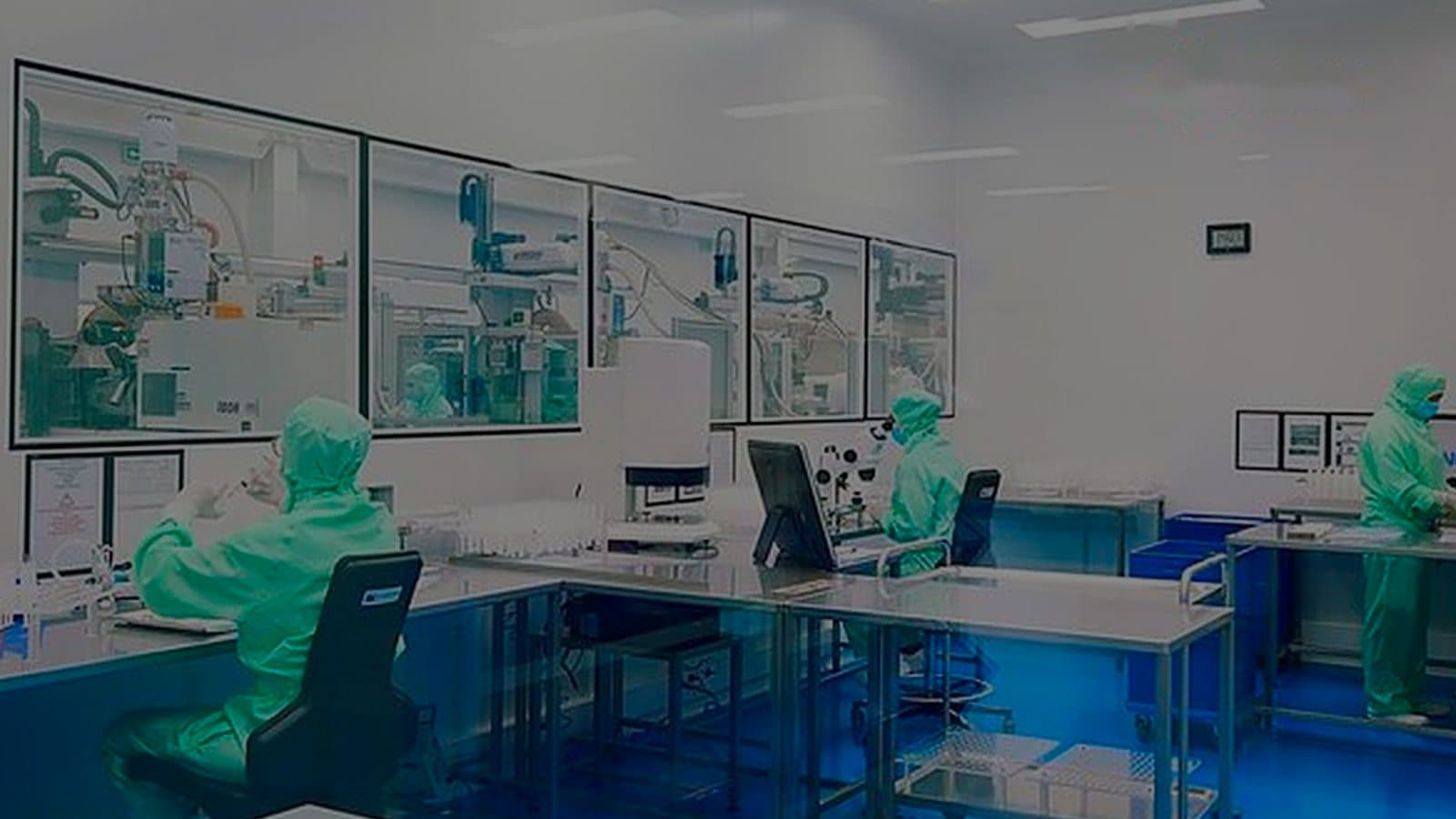
A square internal corner is where the mop turns and the residue stays.
In a cleanroom that residue matters twice. It is somewhere for organisms to sit, and it is somewhere the disinfectant never reaches for its full contact time. The cleaning SOP can be perfect and the corner still loses.
Coving takes the corner away. Wall to floor, wall to wall, wall to ceiling: a curved junction a cleaning tool can follow in one pass. EU GMP Annex 1 asks for smooth, impervious surfaces without recesses that are hard to clean, and a coved junction is the ordinary way modular systems meet that.
The detail is where it goes wrong. In a modular wall the cove is a profile fixed to the panel, and the joint between profile and panel has to be flush and sealed. If it is not, the crevice has only moved a few centimetres. At the floor, the vinyl or resin turned up the wall meets the panel, and that seal line is the one we see fail first, usually where trolleys hit.
The radius is worth one conversation with the people who clean the room. Ask what tool they use and check that it follows the profile. It takes ten minutes, and it is cheaper than changing profiles after the walls are up.
We supply cleanroom panels, doors and modular walls and ceilings through our AeroSano equipment line. We agree the cove detail on a drawing rather than leaving it to site.
Who signs off the cove detail on your projects: QA, the designer or the installer?
Topics
Industries