A pass box sits across a grade boundary designed for at least 10 Pa. The interlock does not fix a worn door seal, a static box is made safe by the disinfectant contact time rather than by waiting, and a dynamic box needs its supply balanced against both rooms and its HEPA filter leak tested.
Grade A must meet ISO 5, 3,520 particles of 0.5 µm or larger per cubic metre, both at rest and in operation. An FFU array is therefore judged with operators and machines in the zone: uniform unidirectional flow, leak-tested H14 filters and a smoke study run with the real interventions.
A loaded filter sheds part of its dust cake when the clamps release. Withdraw it through the upstream access section or sideways through a casing door, never through the section behind it. Then check every clamp by hand and log the new filter's differential pressure as the baseline.
An H14 filter passes 0.005% at MPPS in its factory test, H13 0.05%. A frame or gasket leak passing 0.05% of the airflow equals the whole H13 penetration, cancelling the upgrade. The installed leak test, scanning the filter face and perimeter seal, is where the real performance is proven.
A pass box UV-C lamp doses only the surfaces it can see: 0.1 mW/cm² for 10 minutes gives 60 mJ/cm² on the tray top and nothing underneath. Output also falls with lamp age. Keep the disinfectant wipe as the validated step and manage the lamp with an hour meter and irradiance checks.
In a GMP air handling unit, a wheel carries some exhaust into the supply by design, and a purge sector only reduces it. Run-around coils keep the streams apart at lower recovery. Plate exchangers leak in the direction the fan positions set, so mark and measure the pressure on each side before and at commissioning.
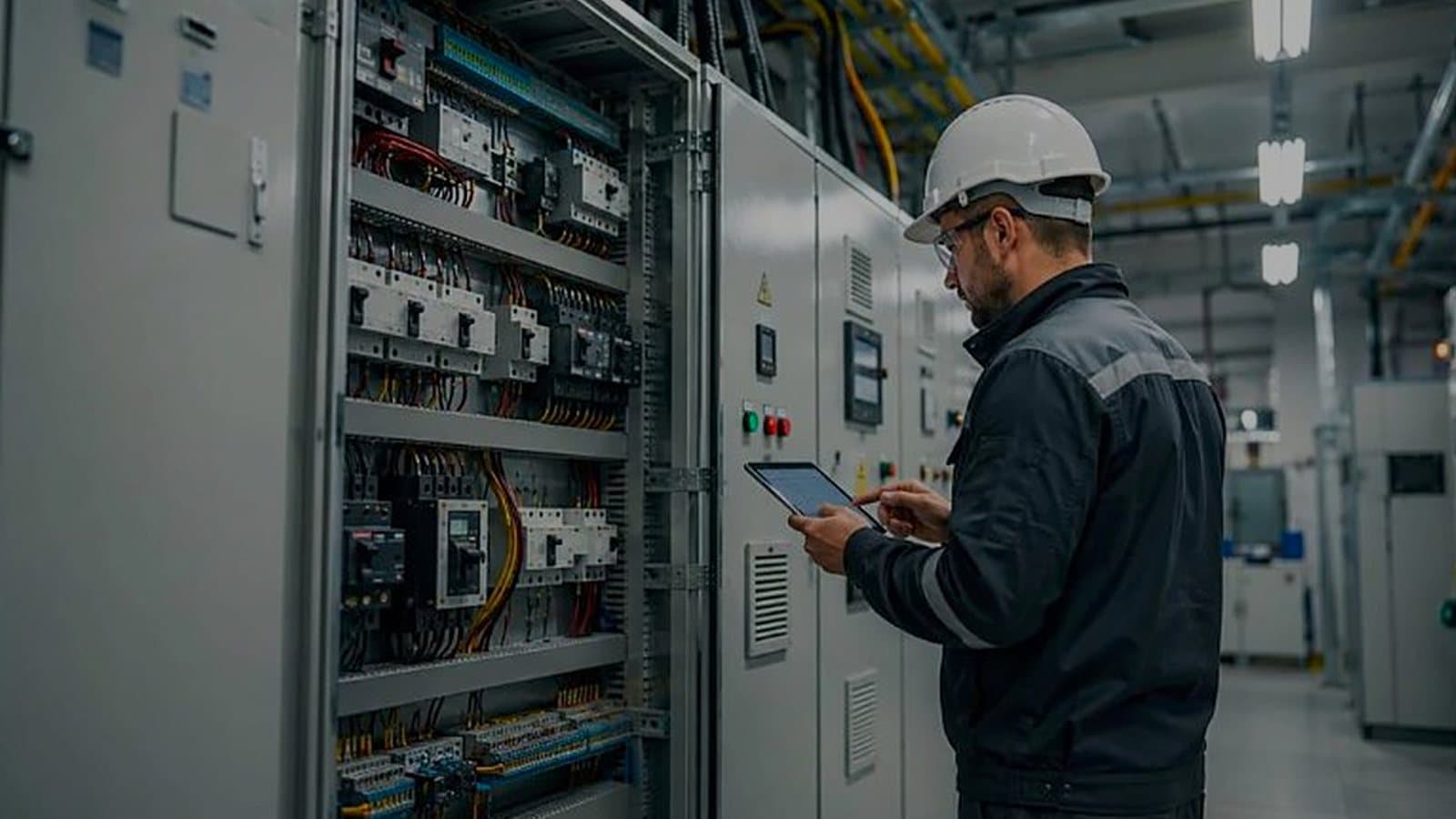
IEC 61439-2 defines four forms of internal separation in a switchboard. Form 4 puts each feeder in its own compartment, so a failed AHU starter can be isolated while the other AHUs keep running; working beside live sections still follows site safety rules. Form 1 or 2 may force a section shutdown.
EN 1886 air leakage classes are measured on a closed casing. When an AHU ships in sections, the class depends on joints made on site. Check the gasket runs in one piece, draw the fixings up in passes, seal the floor seam under the drain pans, and smoke-test the suction-side seam with the fans running.
Clean AHU cooling coils from the leaving face with low-pressure water or steam and an approved, fully rinsed detergent, after checking the drain. Take the frequency from the coil's pressure drop trend against a commissioning baseline, and record the method, detergent batch, before and after readings and photos of both faces.
A control panel FAT is the last time every wire is reachable and the drawings are on the table. Use it for IEC 61439-1 routine verification, point-to-point I/O, interlocks, alarm texts and approved software versions. The same fault found during site loop checks costs a day instead of minutes.
On an equipment-only AHU purchase, write the EN 1886 casing leakage class and F9 filter bypass into the order, witness the leakage test on the built unit at FAT, check the selection against the project airflow schedule, and require the equipment file compiled during production so IQ starts complete.
Standing water under a cooling coil is the classic growth source in an AHU. A hygienic unit adds a drain pan that empties completely, smooth closed inner surfaces, full-size access doors, filter bypass class F9 to EN 1886, removable parts and a complete equipment file. Write each into the specification as a FAT check.