During start and stop, whichever fan moves first decides which way air flows through the door gaps. Positive suites start supply first and stop extract first; containment suites do the opposite. Interlock the order, define the response to a single fan trip and test it at OQ with a real power cut.
The revised EU GMP Annex 1 has applied since 25 August 2023, with point 8.123 following in 2024. A site still planning its gap assessment is years behind. Most findings land in the CCS, for example a pressure alarm delay set at commissioning that nobody can justify.
A maintenance contractor's remote view should be read-only, with setpoints changed only under the site's change control. Its alerts watch the plant behind the room, such as fan speed, filter pressure drop and chilled water temperature, and the escalation path to site is written before the contract starts.
An old AHU leaves with loaded filters, a wet drain pan and shedding insulation. Plan the crane lift or sectional removal route, bag filters and blank ducts before it moves, hold the plant room negative while casing is cut, and watch the neighbouring suites' pressure differentials.
EU GMP Annex 15 section 3 asks for design compliance with GMP to be demonstrated and documented, with URS requirements verified during DQ. Meeting minutes rarely do that. A DQ report traces every URS line to a drawing, calculation or datasheet at a stated revision, with a verdict and a signature.
Balancing from the ceiling void means lifting panels over a clean room. Specify terminal HEPA boxes with a damper adjustable through the diffuser, a lock, an upstream aerosol port for the leak test, a pressure tapping and a seal the damper does not disturb, so the cascade is set with the ceiling shut.
Run-to-failure is a valid maintenance strategy only when a failure shows at once. Standby pumps, fire dampers and smoke detectors fail silently and never qualify. For the rest, check GMP impact, replacement cost and restore time, then record each decision in the criticality assessment with its reason.
Check the cascade room by room: doors should open into the higher-pressure room, BMS setpoints should match the drawing, EMS alarm limits and delays should match the CCS, and each pressure transmitter should measure the rooms the drawing names. Record every difference before deciding which side is wrong.
After an over-budget cleanroom HVAC tender, three savings recur: an EN 1886 L2 casing instead of L1, fewer room pressure transmitters, and deleted door drop-seals. Each can reappear as an OQ failure in airflow, alarm testing or pressure differentials, so check every line against its URS requirement and test before accepting it.
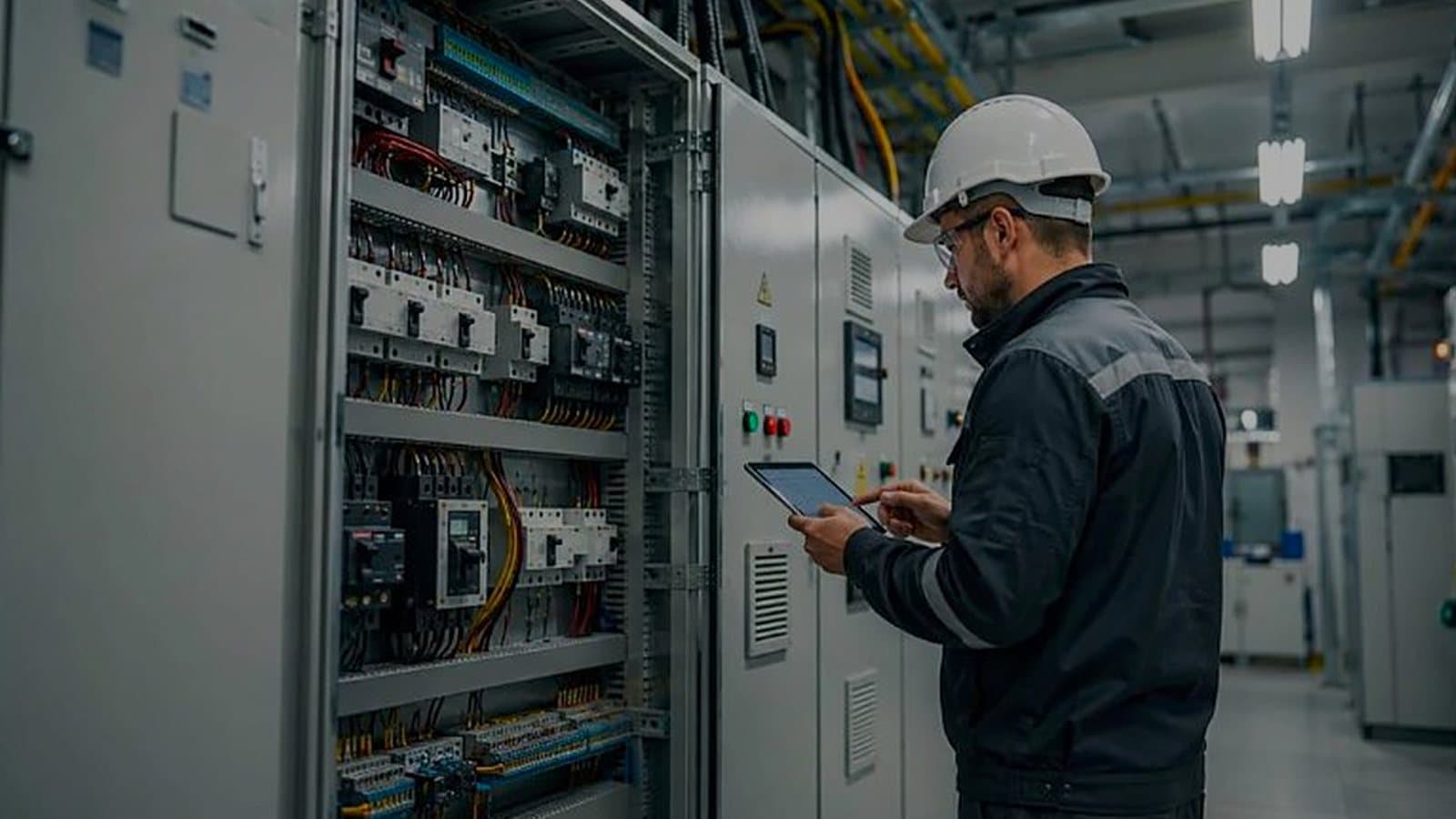
IEC 61439-2 defines four forms of internal separation in a switchboard. Form 4 puts each feeder in its own compartment, so a failed AHU starter can be isolated while the other AHUs keep running; working beside live sections still follows site safety rules. Form 1 or 2 may force a section shutdown.
When a fan motor fails at night, the repair cannot wait for a change board, but the record must hold up. Contain and inform QA, repair like-for-like, raise the change the same day if it is one, assess impact on pressures, batches and the CCS, and record the requalification decision.
A fan wall keeps a GMP supply unit running when one fan fails, provided each fan has a backdraft damper so air cannot flow back through the stopped one. Each EC fan's rectifier adds harmonics, THDi around 35–42% with a DC choke. A single plug fan is simpler but needs a standby.