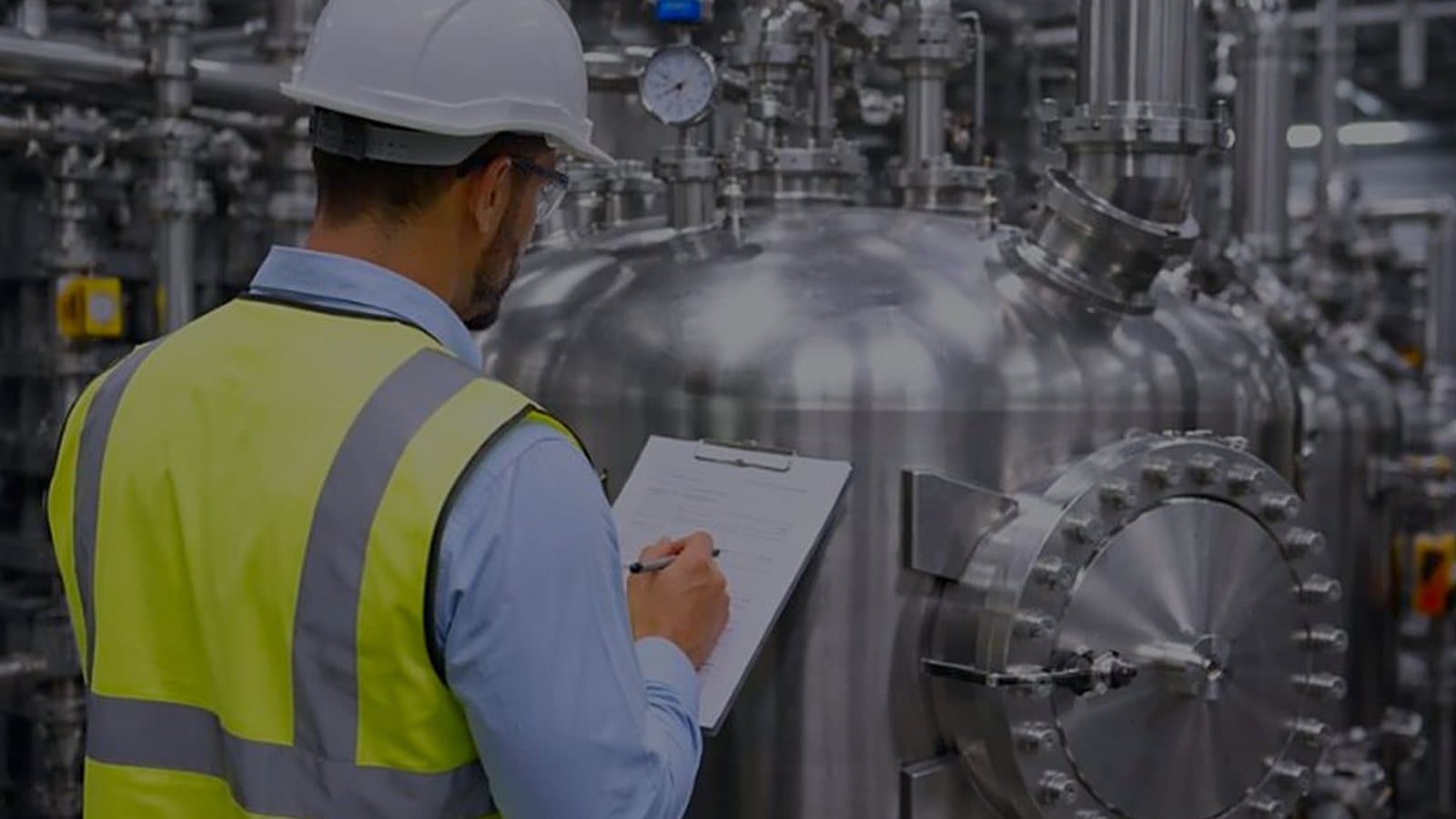
The sequence of operation decides what a cleanroom does on restart, on a trip and in a power cut. QA usually meets it at OQ, when every change costs a software revision and a retest. Walk it line by line with QA and maintenance before panels are built: start order, trips, alarm delays and fail positions.
A response time gets an engineer to site; what they can fix depends on groundwork done earlier: a current asset register, night access and gowning agreed, critical spares within reach, a named decision-maker, and as-built and maintenance records the engineer can open.
A catalogue AHU suits an office zone or a like-for-like swap. Where humidity is specified it needs checking: a room at 20 °C and 45% RH has a dew point of about 7.7 °C, and a range coil can meet total kW yet leave the air wetter. Ask for leaving-air dew point at the site's peak condition.
Above about 2.5 m/s face velocity, a wet cooling coil carries water onto the next section, a microbial risk in a hygienic AHU. A smaller coil face saves casing size but adds an eliminator, higher pressure drop and fan energy. At 5 m³/s, 2.5 m/s needs a 2 m² face.
When bidders select equipment after issue, coil and fan sizes are set under price pressure and every bid prices a different unit. Selecting against calculated loads during design means the tender describes buildable equipment at the budgeted price. Specify performance plus a reference selection, and accept tested equals.
Replacing an AHU in a running facility starts with as-found readings: terminal airflows, pressures across the cascade, temperature and RH. They are the balancing target for the new unit and the evidence that the qualified state returned. Decide with QA beforehand whether to balance to design or to as-found.
Recirculated cleanroom air returns near room condition and needs almost no dehumidification. In a worked wet-season example, 10,000 m³/h of fresh air costs about 186 kW of coil load. Remove avoidable fresh air from exhaust, leakage and over-pressurisation before investing in heat recovery devices.
A 900 mm cleanroom door with a 5 mm undercut leaks about 50 m³/h at 15 Pa, and about 100 m³/h at 10 mm. Door gaps set how much offset air holds a 10–15 Pa cascade. Specify door leakage as a number at a stated pressure, with the test, and check it before installation.
Under EN 779, F9 was a filter class: 95% or more at 0.4 µm. Under EN 1886, F9 is a casing class: at most 0.5% of the airflow bypassing the filter frames. Specify filter stages to ISO 16890 or EN 1822 and the casing bypass class on its own line.
When the fresh-air unit does all the drying and room AHU coils stay dry, every room's humidity depends on that one unit. Size its coil on the wet-season coincident condition, control on off-coil dew point, and decide in the design basis what happens when it trips.
Heat tint is removed by pickling or mechanical cleaning, then passivation restores the oxide layer, and a treated part looks like an untreated one. The only proof is the record made at the time: procedure, chemical, contact time, date, operator and check. Collected during production, it means IQ starts from a complete file.
Filter loading can swing AHU resistance from 250 Pa clean to 450 Pa at change-out while airflow must stay constant. Selecting near 350 Pa and checking design airflow at 450 Pa with the drive at full speed avoids both a fan stuck right of peak and an airflow shortfall. The energy difference is modest.