A loaded filter sheds part of its dust cake when the clamps release. Withdraw it through the upstream access section or sideways through a casing door, never through the section behind it. Then check every clamp by hand and log the new filter's differential pressure as the baseline.
A plant room at 32 °C and 70% RH has a dew point near 26 °C. With 12 °C air inside, a TB3 casing frame sits at 21 to 24 °C and drips, while TB2 spans 24 to 27 °C and only its upper end clears. Ask for the tested kb and check it against the room's dew point.
An H14 filter passes 0.005% at MPPS in its factory test, H13 0.05%. A frame or gasket leak passing 0.05% of the airflow equals the whole H13 penetration, cancelling the upgrade. The installed leak test, scanning the filter face and perimeter seal, is where the real performance is proven.
A pass box UV-C lamp doses only the surfaces it can see: 0.1 mW/cm² for 10 minutes gives 60 mJ/cm² on the tray top and nothing underneath. Output also falls with lamp age. Keep the disinfectant wipe as the validated step and manage the lamp with an hour meter and irradiance checks.
At 16 fins per inch a cooling coil has a fin pitch of about 1.6 mm, and a dehumidifying coil in the tropics runs wet most of the year. Water bridges the gap, pressure drop rises, droplets carry over and film grows. At 10 fins per inch the pitch is about 2.5 mm, at the cost of a larger coil.
An old AHU leaves with loaded filters, a wet drain pan and shedding insulation. Plan the crane lift or sectional removal route, bag filters and blank ducts before it moves, hold the plant room negative while casing is cut, and watch the neighbouring suites' pressure differentials.
In a tropical plant the wet zone of a fresh-air AHU runs from the cooling coil and drain pan to the reheat coil. Specify stainless there, 316 where chlorine agents are used. Fan, pre-filter and mixing sections can be coated galvanised if cut edges are sealed. Ask for weld and passivation records.
Balancing from the ceiling void means lifting panels over a clean room. Specify terminal HEPA boxes with a damper adjustable through the diffuser, a lock, an upstream aerosol port for the leak test, a pressure tapping and a seal the damper does not disturb, so the cascade is set with the ceiling shut.
Neither an EN 10204 3.1 nor a 3.2 helps if the heat number is cut off a pipe before it is transferred. A 3.1 is validated by the manufacturer's independent inspector; a 3.2 adds a purchaser's or regulatory inspector at extra cost and lead time. Ask for 3.2 where the URS or a part's design code requires it.
In a GMP air handling unit, a wheel carries some exhaust into the supply by design, and a purge sector only reduces it. Run-around coils keep the streams apart at lower recovery. Plate exchangers leak in the direction the fan positions set, so mark and measure the pressure on each side before and at commissioning.
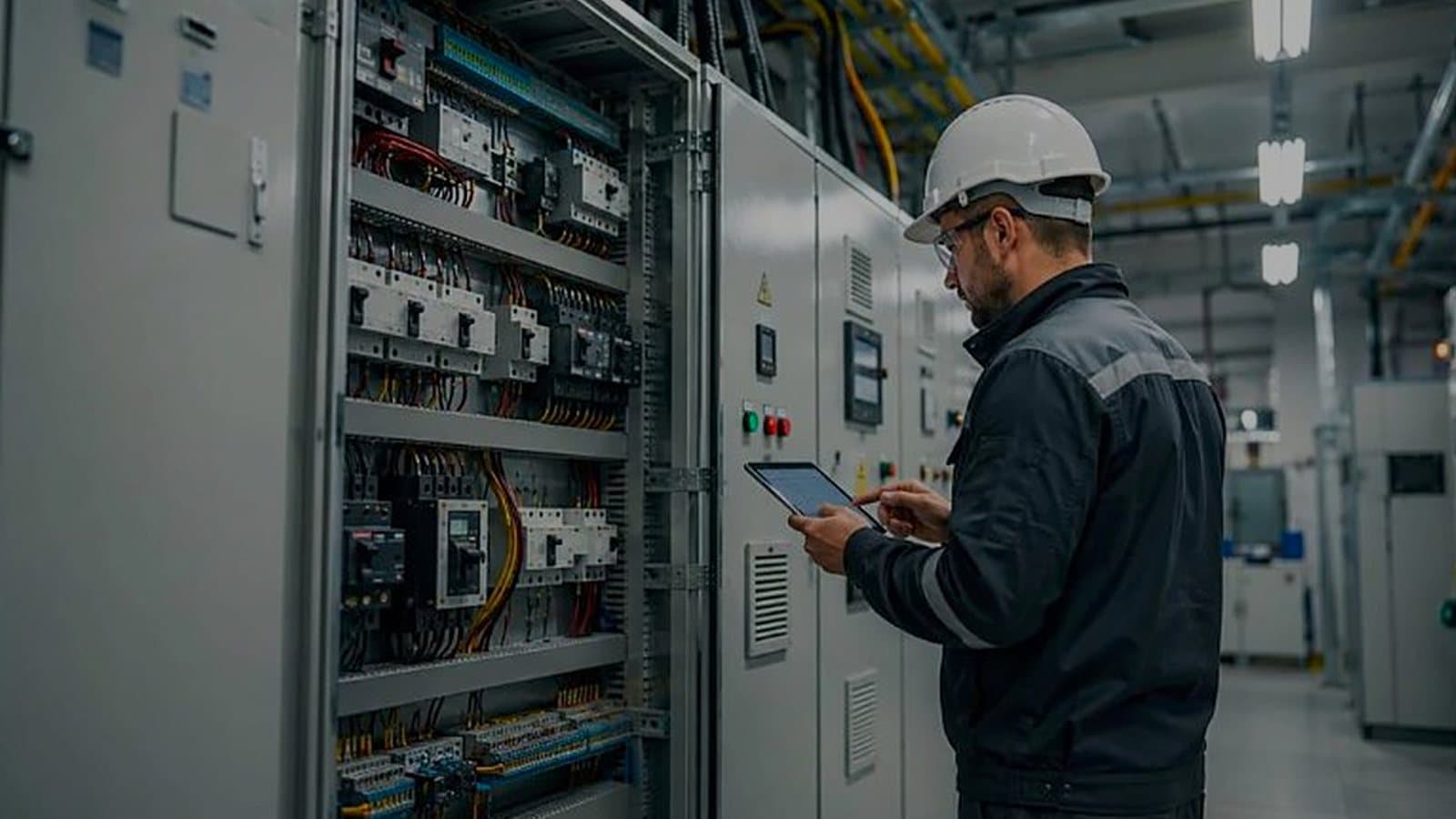
IEC 61439-2 defines four forms of internal separation in a switchboard. Form 4 puts each feeder in its own compartment, so a failed AHU starter can be isolated while the other AHUs keep running; working beside live sections still follows site safety rules. Form 1 or 2 may force a section shutdown.
EN 1886 air leakage classes are measured on a closed casing. When an AHU ships in sections, the class depends on joints made on site. Check the gasket runs in one piece, draw the fixings up in passes, seal the floor seam under the drain pans, and smoke-test the suction-side seam with the fans running.