At 16 fins per inch a cooling coil has a fin pitch of about 1.6 mm, and a dehumidifying coil in the tropics runs wet most of the year. Water bridges the gap, pressure drop rises, droplets carry over and film grows. At 10 fins per inch the pitch is about 2.5 mm, at the cost of a larger coil.
An old AHU leaves with loaded filters, a wet drain pan and shedding insulation. Plan the crane lift or sectional removal route, bag filters and blank ducts before it moves, hold the plant room negative while casing is cut, and watch the neighbouring suites' pressure differentials.
For a 10,000 m³/h AHU in Ho Chi Minh City, full fresh air needs about 180 kW at the coil and 20% fresh air about 60 kW. WHO's HVAC guideline for non-sterile products allows recirculation where filtration and a risk assessment support it, with a written case per system.
In a tropical plant the wet zone of a fresh-air AHU runs from the cooling coil and drain pan to the reheat coil. Specify stainless there, 316 where chlorine agents are used. Fan, pre-filter and mixing sections can be coated galvanised if cut edges are sealed. Ask for weld and passivation records.
A 10,000 m³/h fan at 1,500 Pa and 0.6 overall efficiency draws about 6.9 kW, around 61 MWh a year in a cleanroom. Every 100 Pa removed at design stage saves about 0.46 kW for the life of the plant. A pressure budget per AHU in the design basis is where it starts.
EU GMP Annex 15 section 3 asks for design compliance with GMP to be demonstrated and documented, with URS requirements verified during DQ. Meeting minutes rarely do that. A DQ report traces every URS line to a drawing, calculation or datasheet at a stated revision, with a verdict and a signature.
Raising a 6 × 5 m room from 3.0 m to 3.5 m drops 1,800 m³/h from 20 to 17.1 air changes. The in-operation particle count barely moves, because steady-state concentration depends on generation and supply airflow, not volume. Recovery takes about 17% longer. Restoring 20 ACH needs 2,100 m³/h.
Neither an EN 10204 3.1 nor a 3.2 helps if the heat number is cut off a pipe before it is transferred. A 3.1 is validated by the manufacturer's independent inspector; a 3.2 adds a purchaser's or regulatory inspector at extra cost and lead time. Ask for 3.2 where the URS or a part's design code requires it.
In a GMP air handling unit, a wheel carries some exhaust into the supply by design, and a purge sector only reduces it. Run-around coils keep the streams apart at lower recovery. Plate exchangers leak in the direction the fan positions set, so mark and measure the pressure on each side before and at commissioning.
Most of a cleanroom HVAC contract is paid before the turnover documents exist. Split the retention into two parts, released on acceptance of the turnover package and of the documents, and size the documentation part on what it would cost the owner to finish as-builts, calibrations and retests without the contractor.
After an over-budget cleanroom HVAC tender, three savings recur: an EN 1886 L2 casing instead of L1, fewer room pressure transmitters, and deleted door drop-seals. Each can reappear as an OQ failure in airflow, alarm testing or pressure differentials, so check every line against its URS requirement and test before accepting it.
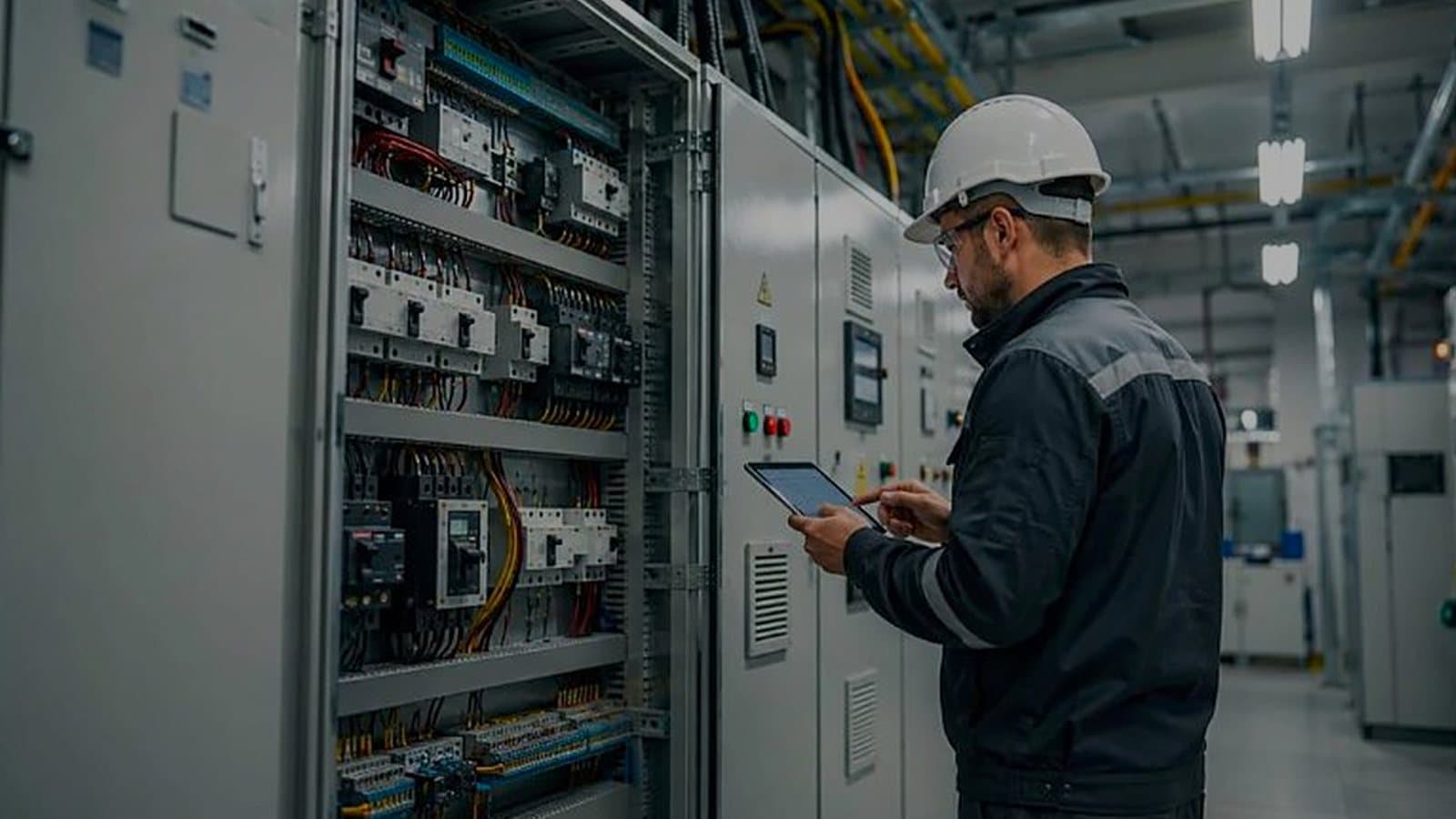
IEC 61439-2 defines four forms of internal separation in a switchboard. Form 4 puts each feeder in its own compartment, so a failed AHU starter can be isolated while the other AHUs keep running; working beside live sections still follows site safety rules. Form 1 or 2 may force a section shutdown.