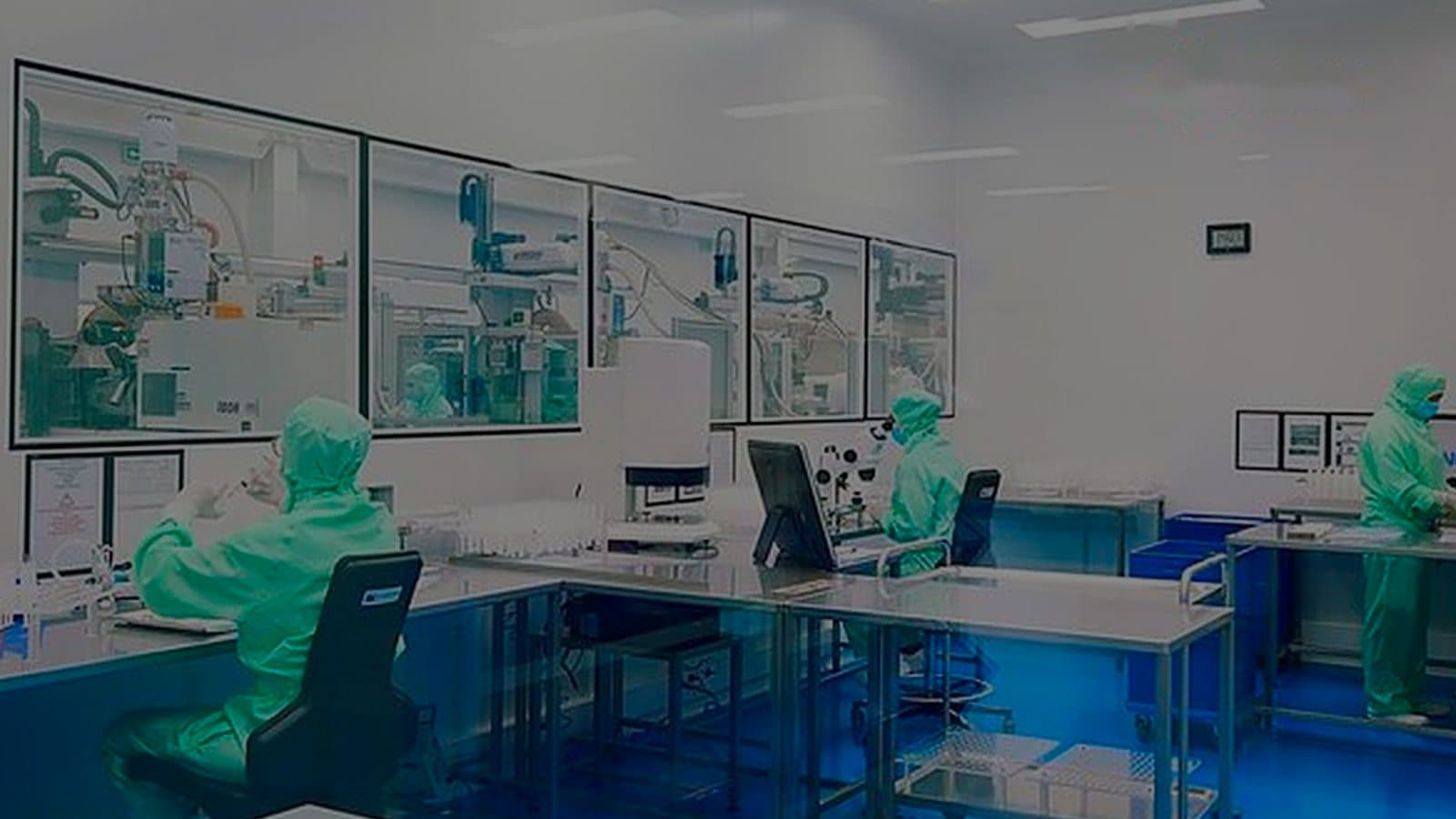
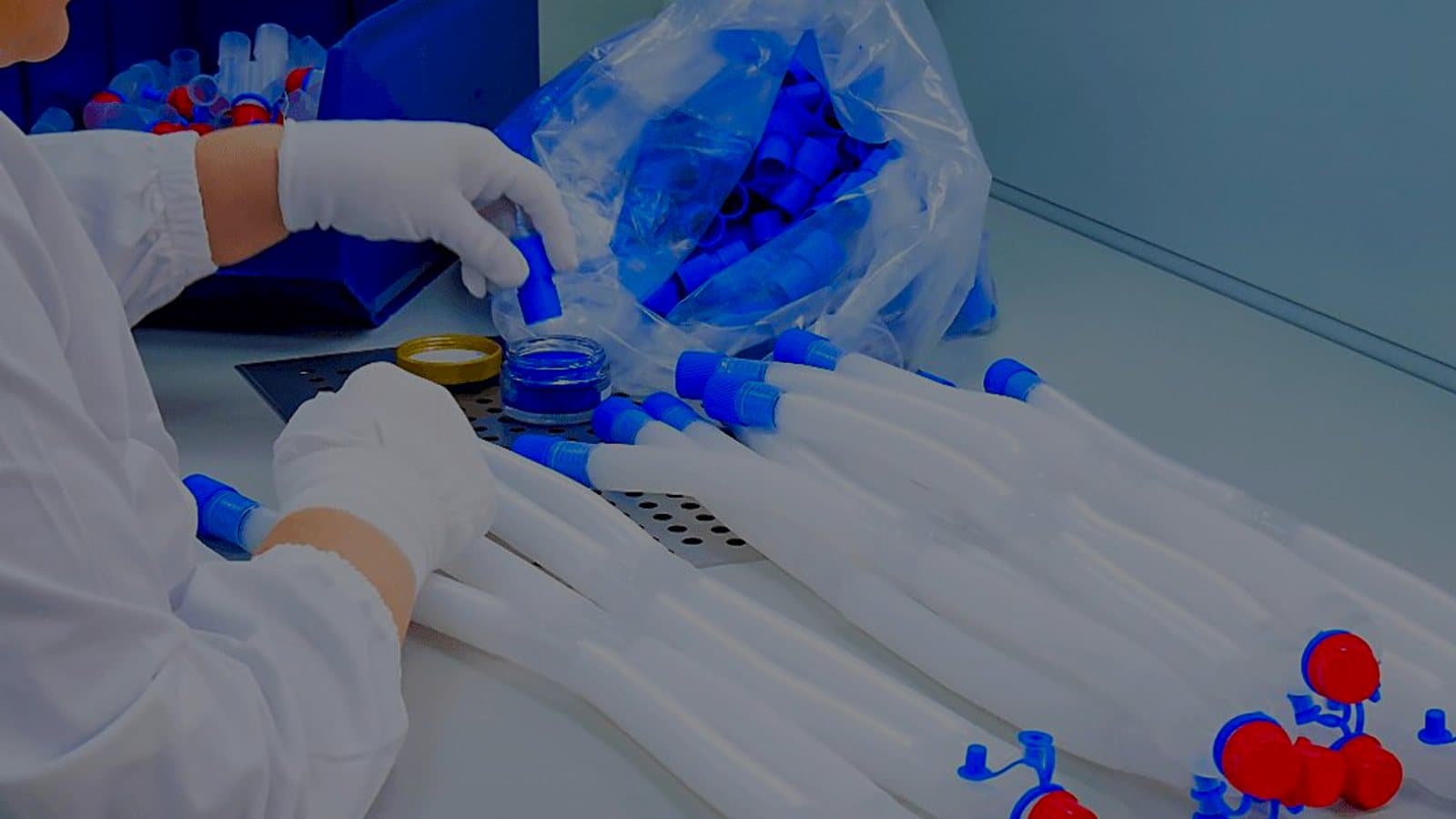
Opened encapsulant rolls pick up moisture on the layup table, and it can come out in the laminator as voids and later as delamination. Take the film supplier's handling limits as the design input for the layup zone, log RH at the table through a rainy week, and zone stringing to lamination.
Transmitter accuracy is usually quoted as a percentage of full scale. A 1% device ranged 0–1,000 Pa carries ±10 Pa of error, the whole of a 10 Pa cascade step; one specified 0–50 Pa at 1% of full scale is within ±0.5 Pa. Re-ranging a wide unit down keeps its base error, so specify the range.
Long-lead AHUs are often ordered before a single end-of-design DQ report is signed, so a casing leakage class of L2 against a URS that asked for L1 surfaces at IQ as a deviation. Splitting DQ along the procurement packages, with each section signed before its order is released, finds it while the order can still change.
During start and stop, whichever fan moves first decides which way air flows through the door gaps. Positive suites start supply first and stop extract first; containment suites do the opposite. Interlock the order, define the response to a single fan trip and test it at OQ with a real power cut.
Grade D sets the particle limit and little else. In an OSD compression room the product is the contaminant, handled with a pressure sink and local exhaust; a semi-solids room has little dust but heat and water from vessels and washdown. Fill in the process loads on the room data sheet before copying any airflow.
An HVAC energy saving is only as good as its baseline. Hold room limits, weather file, production and cleaning schedules and airflow justification identical in both models, and define the baseline system in writing, for example with ASHRAE 90.1 Appendix G, before quoting any percentage.
A vision panel frame that projects from a cleanroom wall becomes a ledge that collects particles and gets wiped around. Specify sealed double glazing set flush with the panel skin, joints sealed like the rest of the wall, and ask for a section drawing through the panel at design review, where the ledge becomes visible.
Two accountable parties on one RACI row means nobody decides. The rows most likely to collect two As cross a handover: design changes after tender, vendor drawing approval, long-lead releases and readiness for IQ. Read every row as "X decides" and fix the ones that need two names before kickoff.
IEEE 519-2022 allows 8% total voltage distortion at 1 kV and below, but only 5% total and 3% per harmonic from 1 to 69 kV. A plant supplied at 22 kV has its point of common coupling on the MV side, so the stricter limits apply, and fan-wall harmonics pass straight through the transformer.
A loaded filter sheds part of its dust cake when the clamps release. Withdraw it through the upstream access section or sideways through a casing door, never through the section behind it. Then check every clamp by hand and log the new filter's differential pressure as the baseline.
Annex 1 (2022) sets Grade A microbial limits as no growth and requires any growth to be investigated; FDA's 2004 aseptic guidance gives ISO 5 action levels of 1 CFU/m³ and 1 CFU per 4-hour settle plate. A plant filing in both markets can write one stricter rule and one investigation route.
A 1,000 m² fab bay with FFUs over 90% of its ceiling holds about 1,250 units of 1,200 × 600 mm. After handover each is a motor on the BMS, and the design documents should group the units by tool and zone so the fault logic can tell a work order from an alarm.