ISO 16890 rates filters as ePM10, ePM2.5 or ePM1, and broadly a filter must remove at least 50% of that particle fraction to earn the group. In a GMP air handling unit the pre-filter grade sets how fast the terminal HEPA loads, and so how often it is replaced and leak-tested.
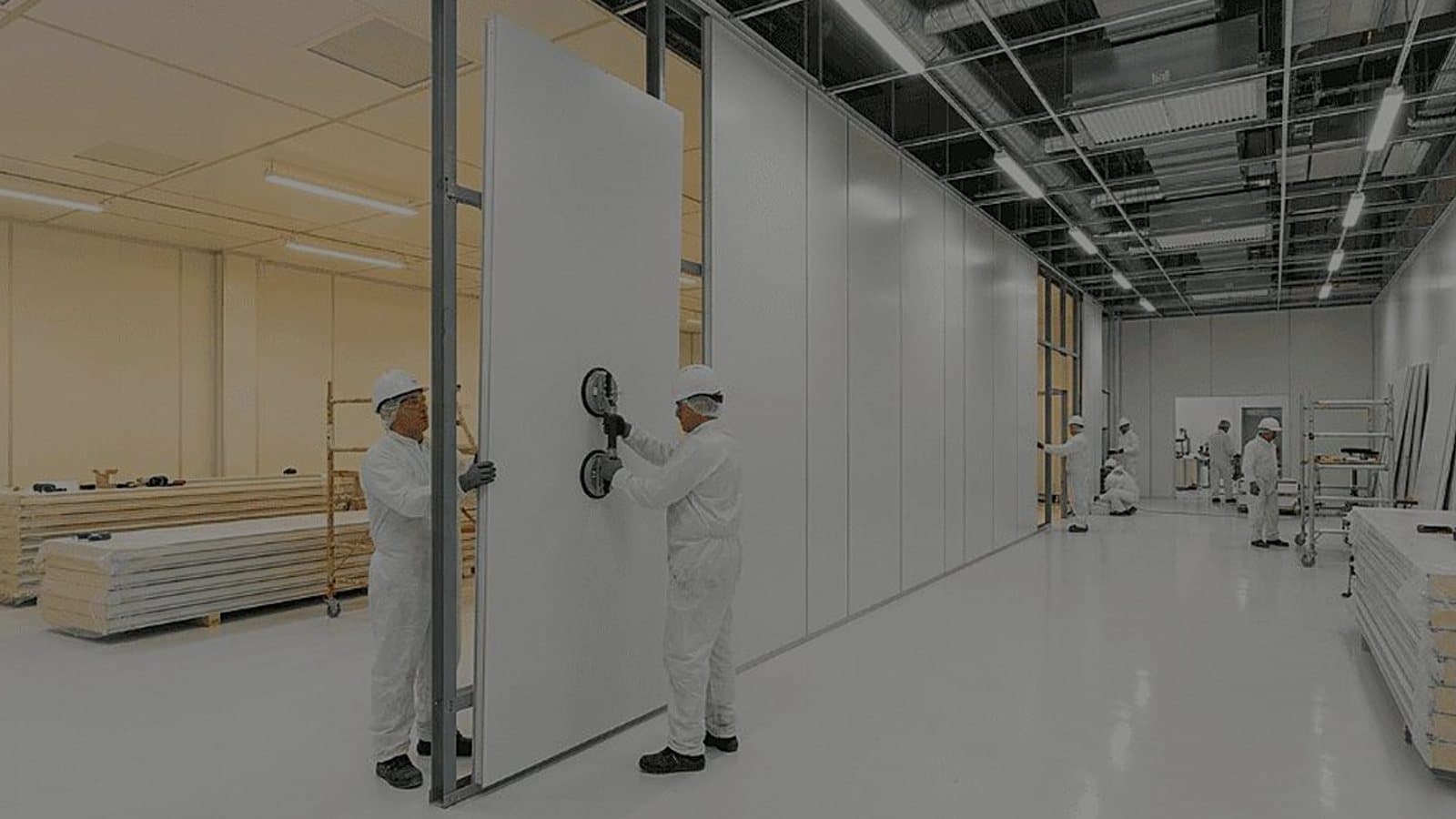
Masonry with epoxy paint is cheaper to build, but every later penetration in a classified room means drilling, repainting, cleaning and a particle count under change control. Before choosing, count how often each type of room in your current plant changed in the last five years; rooms that changed more than once usually repay panels.
Custom AHU factory slots can go before the design is final. A capacity reservation holds capacity and a delivery window against the owner's spec-freeze date: airflow and static pressure, coil duties, arrangement, EN 1886 casing classes and controls. A firm order placed too early turns each later design change into a priced variation.
Taking one AHU out of a running GMP plant changes the leakage balance of the rooms next door, and a 10 Pa step between grades can fall away. Seal shared air paths first, trim return dampers on the boundary rooms, record their original positions and keep EMS alarm limits at validated values.
A desiccant rotor is the right tool for deep drying and an expensive one for bulk moisture. In tropical fresh air, a pre-cooling coil ahead of the rotor removes most of the water by condensation, so the rotor can be smaller, use less regeneration heat and hold its leaving condition more steadily.
Cooling coils foul on the air-entering face, while water and growth appear on the leaving side over the drain pan. A hygienic AHU needs access sections upstream and downstream of the coil and a sloped, reachable drain pan that extends past the leaving face.
A pass box sits across a grade boundary designed for at least 10 Pa. The interlock does not fix a worn door seal, a static box is made safe by the disinfectant contact time rather than by waiting, and a dynamic box needs its supply balanced against both rooms and its HEPA filter leak tested.
In a ceiling of forty fan filter units, a stopped one looks like a running one. Most EC-driven FFUs can report their status. Send each fault to the BMS or SCADA for a time-stamped record, and add a local indication at the room so the operator sees it before a batch starts.
A 4 × 4 kW EC fan wall draws about 27.2 A, and Humiley's sizing note puts it on one 25 A active filter module against a design target of THDi ≤ 5% at the PCC. Eight fans draw about 54.4 A and take two 25 A modules in parallel as master and slave.
Late service penetrations through cleanroom panels are a common reason a room loses its pressure differential. Sleeve each one to the panel, seal both faces with a flush cover on the clean side, run one service per sleeve and keep a penetration schedule that is checked before the pressure test.
Grade A must meet ISO 5, 3,520 particles of 0.5 µm or larger per cubic metre, both at rest and in operation. An FFU array is therefore judged with operators and machines in the zone: uniform unidirectional flow, leak-tested H14 filters and a smoke study run with the real interventions.
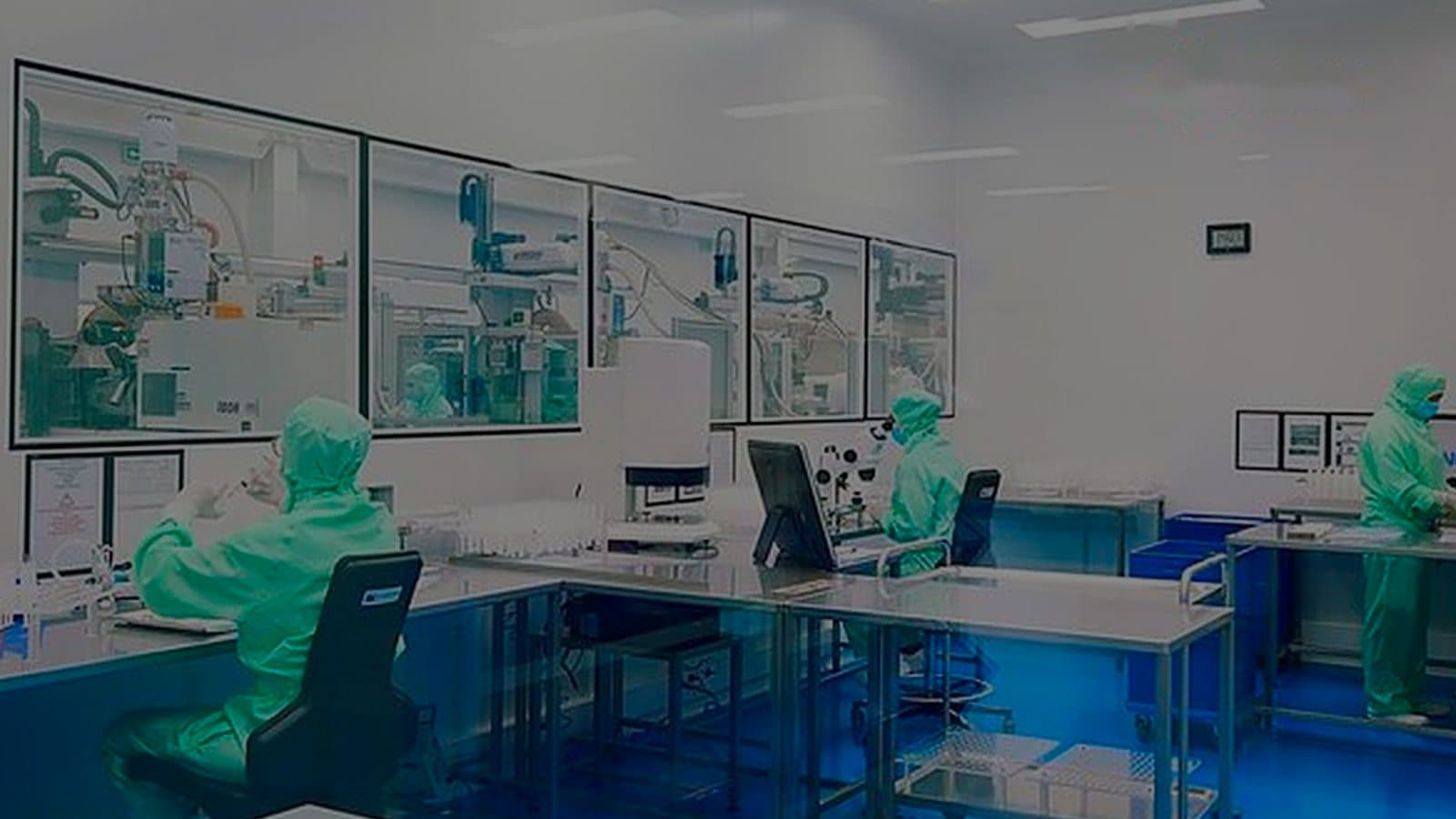
A vision panel frame that projects from a cleanroom wall becomes a ledge that collects particles and gets wiped around. Specify sealed double glazing set flush with the panel skin, joints sealed like the rest of the wall, and ask for a section drawing through the panel at design review, where the ledge becomes visible.