NFPA 110 Type 10 restores power within 10 seconds. Controllers, EMS and network gear reboot long before that, leaving gaps in the record when room pressures are disturbed. Size a UPS for the loads that must not blink, keep fans on the generator, and prove it with a black-start test.
In a GMP air handling unit, a wheel carries some exhaust into the supply by design, and a purge sector only reduces it. Run-around coils keep the streams apart at lower recovery. Plate exchangers leak in the direction the fan positions set, so mark and measure the pressure on each side before and at commissioning.
ASHRAE 0.4%, 1% and 2% design conditions are exceeded about 35, 88 and 175 hours a year. For a room with a validated RH limit, choosing the percentile is choosing how many excursion hours you accept. Use the dehumidification dew point column, choose per room, and write the choice into the design basis.
A liquids suite is washed down often, so its contamination points are floor drains, floor falls, floor-wall joints and purified water outlets. Falls must reach the drain without ponding, drains must be cleanable, joints coved, outlets drainable and sampled, and airflow sized to dry the room before the next shift.
Design qualification checks the design against the URS, so a URS written by the designer to match the drawings gives DQ nothing to challenge. The designer can draft wording and add numbers, but the owner's process, QA and production people should own and sign every requirement, and no line should be written to fit a chosen solution.
Most of a cleanroom HVAC contract is paid before the turnover documents exist. Split the retention into two parts, released on acceptance of the turnover package and of the documents, and size the documentation part on what it would cost the owner to finish as-builts, calibrations and retests without the contractor.
ISO 14644-1 sets class limits at six particle sizes, and ISO 7 has limits at only three: 352,000 at ≥0.5 µm, 83,200 at ≥1 µm and 2,930 at ≥5 µm per m³. A URS that states the class without the size and occupancy state leaves both to the protocol writer.
After an over-budget cleanroom HVAC tender, three savings recur: an EN 1886 L2 casing instead of L1, fewer room pressure transmitters, and deleted door drop-seals. Each can reappear as an OQ failure in airflow, alarm testing or pressure differentials, so check every line against its URS requirement and test before accepting it.
ISO 14644-1 allows a room to be classified as-built: installation complete, services running, no equipment, materials or people. On a new suite it shows whether the HVAC, filters and envelope can reach the class alone. It says nothing about machines or people, so the GMP classification is still done at rest and in operation.
SEMI F47 expects semiconductor tools to ride through sags to 50% for 200 ms, 70% for 0.5 s and 80% for 1 s. Fan drives, contactors and controls are often bought to no such curve, so the tool stays up while the cleanroom loses airflow. Specify the support systems to the same curve.
FDA's 2004 aseptic guidance asks for at least 10–15 Pa between rooms of different classification; Annex 1 gives at least 10 Pa as guidance. Setting each cascade step at 15 Pa meets both. Holding it is harder: seals wear and filters load, so trend the differentials instead of waiting for alarms.
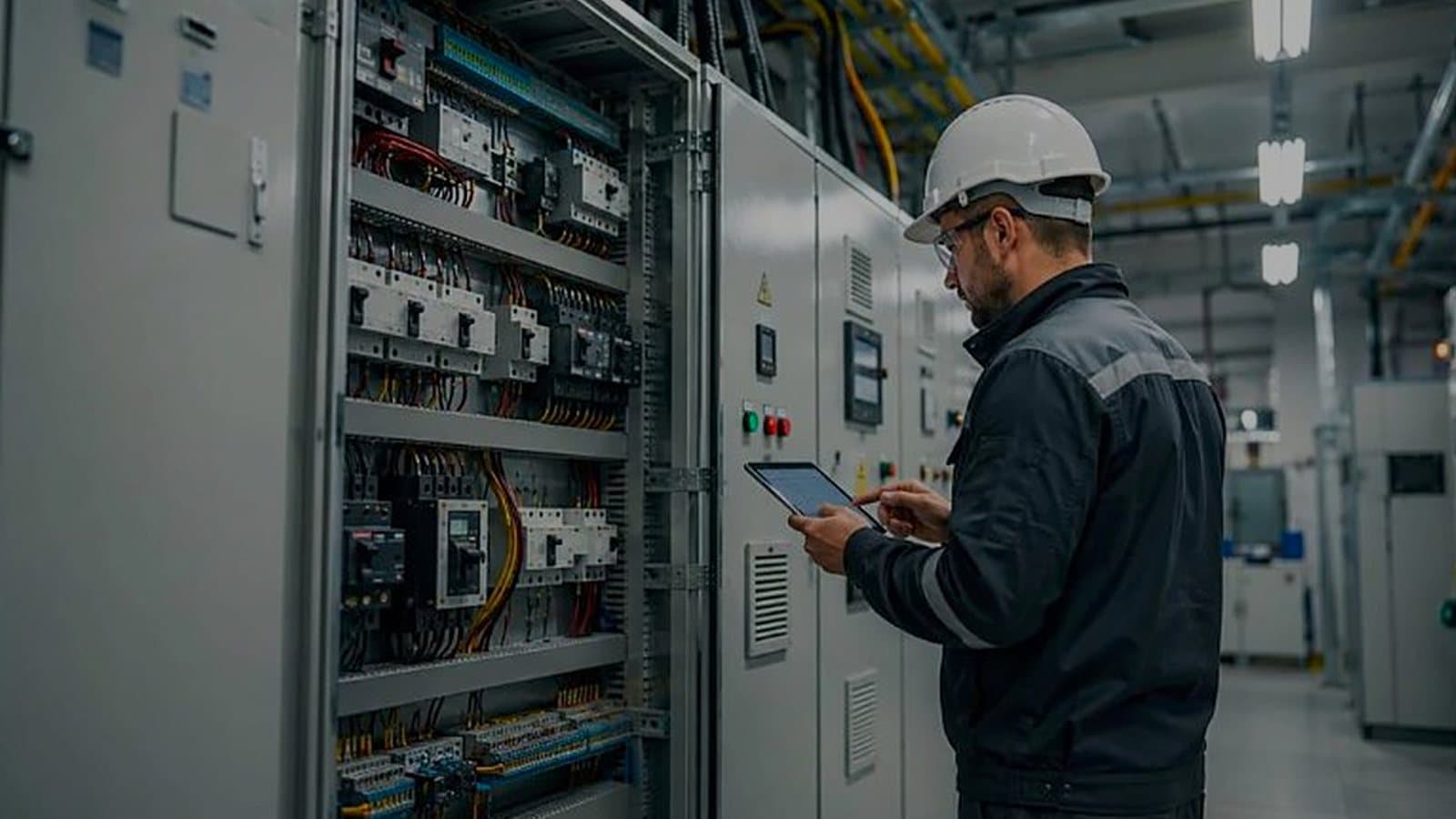
IEC 61439-2 defines four forms of internal separation in a switchboard. Form 4 puts each feeder in its own compartment, so a failed AHU starter can be isolated while the other AHUs keep running; working beside live sections still follows site safety rules. Form 1 or 2 may force a section shutdown.